When a Warrant Goes Out: Understanding Your Legal Exposure
A warrant issued against you is fundamentally different from an arrest. It’s a court order signed by a judge that gives law enforcement the legal authority to locate, detain, and bring you before the court. Once active, that warrant doesn’t expire. It sits in the system indefinitely, waiting to be discovered during a traffic stop, routine ID check, or employment background screening.
The moment a warrant is issued, you’re technically a fugitive in the eyes of the law, even if you’re unaware it exists. This distinction matters because it changes your legal standing immediately. You lose certain protections and your options narrow dramatically once arrest occurs.
We’ve seen clients discover outstanding warrants during routine traffic stops, border crossings, or airport security checks. In those moments, officers can arrest you on the spot, and bail becomes the immediate financial hurdle. The longer a warrant remains active, the more complicated your case becomes, and the harder negotiation becomes once you’re in custody.
The exposure you face depends on the original charge. A misdemeanor warrant creates different consequences than a felony warrant, but both carry the same legal vulnerability: law enforcement can arrest you anywhere within their jurisdiction to bring you before the court.
When you miss a scheduled court appearance, the judge doesn’t simply reschedule. Missing court is treated as contempt of court, which creates an entirely separate violation stacked on top of your original charge. This compounding effect is where cases spiral quickly.
Here’s what actually happens behind the scenes. The prosecutor views a missed appearance as disrespect for the judicial process. Judges see it as a sign you won’t comply with court orders. Both perspectives make negotiation harder and sentences harsher. We’ve watched cases where a client faced reasonable probation terms, but after missing court, that same offer disappeared.
The specific consequences include:
Additional charges for failure to appear (FTA), which carry separate sentencing exposure
Loss of any prior bail or release on own recognizance (ROR) status
Dramatic increase in requested bail amounts at re-arrest
Prosecutor hardening their negotiating position
Judge’s reduced confidence in your reliability
Potential immigration consequences if you’re not a U.S. citizen
Each missed appearance also triggers administrative processes. Court staff issues a bench warrant (a judge’s direct order for your arrest), which goes into law enforcement databases. Your driver’s license may be suspended. Your employment and housing could be at risk if background checks flag the warrant.
The cascading effect means your original case, which might have been resolved favorably, becomes exponentially more difficult after you’ve missed court. We recommend addressing warrants immediately because every day of delay increases the damage.
How We Handle Warrant Recalls Before Arrest Happens
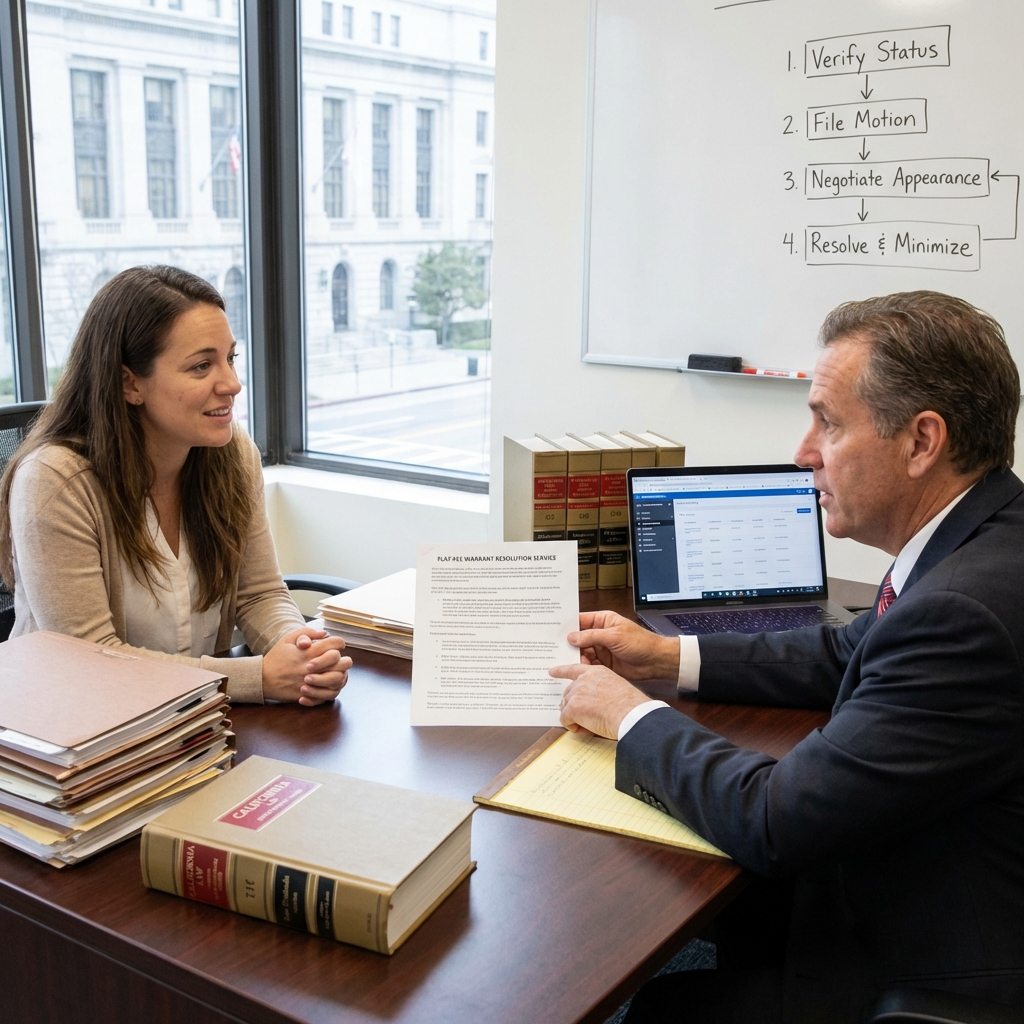
Our approach is built on preventing arrest rather than managing it after the fact. When you contact us about an outstanding warrant, our first step is verification. We confirm the warrant’s exact status, the court issuing it, and the original charges involved. This takes hours, not days, and gives us clear information to work with.
Once we know what we’re dealing with, we initiate what’s called a warrant recall application or surrender process. We contact the issuing court, typically through the prosecutor’s office, and request permission to have you appear voluntarily rather than be arrested. This distinction is critical because voluntary appearance demonstrates good faith to the judge and prosecutor, which affects both your immediate outcome and future negotiation credibility.
Illustration 1
The recall process requires strategy. We don’t simply walk you into court; we prepare the ground first. We communicate with the prosecutor about why you missed court, establish your ties to the community, confirm your employment and residence stability, and build a framework that gives the judge confidence you’ll comply going forward. We essentially solve the judge’s core concern before you step into the courtroom.
Our team coordinates the exact timing and logistics. We arrange for you to surrender at a specific time, which means avoiding the uncertainty and danger of arrest at an unpredictable moment. You maintain dignity and control. You arrive with counsel present. The court sees a client taking responsibility and engaging the system properly.
Negotiating Your Court Appearance to Minimize Consequences
Once we’ve recalled the warrant and scheduled your appearance, negotiation becomes our focus. We enter these conversations with a specific goal: minimize the immediate consequences of missing court while protecting your position on the original charges.
The failure to appear charge itself is negotiable. We work with prosecutors to potentially dismiss, reduce, or defer the FTA if circumstances warrant it. For instance, if you missed court due to a genuine emergency (serious illness, family crisis, transportation failure), documentation and explanation can matter significantly.
We also negotiate the conditions of your release going forward. The prosecutor will likely request new bail amounts or stricter conditions. We counter with evidence of your stability: employment letters, housing arrangements, community ties, and a demonstrated plan to never miss court again. Our goal is securing release on the most favorable terms possible, often on your own recognizance if the original charge allows.
Beyond the immediate hearing, we address the broader case. Missing court doesn’t erase your original defense strategy; it just adds urgency. We use the recall process to assess where prosecutors stand on plea offers, diversion opportunities, or other resolution paths. Sometimes the reset allows us to pursue different resolution strategies than were available before the missed appearance.
Protecting Your Employment and Stability During the Process
One of our core concerns during warrant recall situations is preventing collateral damage to your employment and housing. A warrant and arrest can trigger job loss, which then undermines everything else we’re trying to accomplish.
We manage timing strategically. When possible, we coordinate your court appearance for early morning or schedule it on a day when minimal work disruption occurs. We also prepare letters for your employer explaining your legal situation in professional terms, making clear that you’re addressing the matter with counsel and expect to resolve it quickly.
For housing, we address any lease concerns proactively. Most landlords don’t need to know about warrants unless you face eviction. But if your lease allows termination for criminal violations or arrest, we prepare communication strategies that keep you housed through the process.
We also discuss financial planning. Court costs, bail if required, and our legal fees are all factors. We offer flat-fee pricing for warrant recall cases specifically because clients facing this situation need cost certainty. No surprises, no escalating bills as complications arise.
Our Flat-Fee Warrant Resolution Service Explained
We’ve structured our warrant recall service around a flat fee because this situation demands clarity and accessibility. When you’re facing a warrant, the last thing you need is uncertainty about legal costs.
Our flat-fee service covers the complete warrant recall process: verification of warrant status, communication with the issuing court and prosecutor, preparation of any applications or documentation, negotiation of release conditions, and representation at your recall hearing. The fee remains the same regardless of how many conversations occur or how long negotiations take.
This pricing structure reflects our confidence in the process and our commitment to clients who need help fast. You know the cost upfront. There are no hourly surprises, no additional charges for phone calls or document preparation. We include payment plans because we understand that getting arrested isn’t financially convenient for anyone.
The flat fee also means we’re invested in efficiency. We move quickly because speed protects your employment and reduces the warrant’s time to damage your life further. Every day we delay increases risk.
What to Expect When We Recall Your Warrant
Illustration 2
Your warrant recall process typically unfolds over one to three weeks, depending on court schedules and prosecutor responsiveness. Understanding the timeline helps you prepare mentally and logistically.
Week one involves our investigation and initial contact with the court. We verify warrant details, research the original case file, and begin preliminary talks with the prosecutor. You’ll complete an intake with us that documents your employment, residence, community ties, and any circumstances that contributed to the missed court date.
Week two typically sees formal recall applications or surrender arrangements being finalized. We coordinate the exact date and time for your appearance. You should expect us to call with detailed instructions about where to go, what to bring, what to wear, and what to expect in the courtroom.
On appearance day, you’ll arrive early with us. We’ll be with you throughout the process. The hearing itself is usually brief: the judge will address the missed court date, hear from the prosecutor about your case status, listen to our explanation and mitigation, and make decisions about your release and conditions going forward.
After the hearing, we explain your new obligations, confirm your understanding of any new court dates, and discuss next steps for your underlying case. Most clients leave feeling relief that the warrant is resolved and clarity about what comes next.
How Record Expungement Follows Your Case Resolution
Your warrant recall and court appearance negotiation are immediate priorities, but we’re also thinking ahead to record expungement. How your current case resolves determines what expungement options will be available to you later.
Once your case reaches resolution, you become eligible for record clearance under California law. If you’re convicted, you may qualify for expungement under Penal Code 1203.4, which essentially dismisses the conviction and allows you to legally answer “no” when asked if you’ve been convicted, except in specific circumstances.
If you’re acquitted or charges are dismissed, expungement is even more favorable. Your arrest record can be sealed and destroyed, removing almost all public record of the criminal justice involvement.
We discuss expungement eligibility during your recall process because it affects negotiation strategy. For example, if certain plea agreements lead to convictions that aren’t eligible for expungement, while others lead to sentences that qualify, that matters. We’re positioning your case for the best possible long-term outcome, not just surviving the immediate warrant situation.
Why Our 24/7 Availability Matters in Warrant Situations
Criminal situations don’t respect business hours. Warrants are discovered at odd times: during late-night traffic stops, early morning arrests, or weekend encounters with law enforcement. We operate 24/7 specifically because warrant situations demand immediate response.
If you’re arrested on a warrant over the weekend, you’re sitting in custody until Monday morning. If you contact us immediately after arrest, we can contact the prosecutor and judge’s office first thing Monday, move aggressively for a recall hearing, and potentially have you released before the day ends. That 24/7 availability saves you real time in custody and the fear that accompanies being arrested without counsel.
Even before arrest, if you discover a warrant late Friday, contacting us immediately means we can work the weekend, make contact with the appropriate court, and potentially have arrangements in place before Monday morning court opens. You’re not waiting helplessly for business hours to resume.
Our criminal warrant defense attorney team responds to warrant calls within hours because we understand the urgency. This isn’t a standard legal matter; it’s a threat to your freedom that requires speed.
Taking Action Now vs. Waiting for Arrest
The choice between proactively contacting us about a known warrant versus waiting for arrest is stark. One preserves your agency and options; the other surrenders both.
Illustration 3
Proactive recall gives you leverage. You appear voluntarily, demonstrating compliance. The prosecutor and judge see responsibility. Negotiation happens from a position where you’re cooperating. You choose when and where to appear.
Waiting for arrest means police decide when you’re brought in, potentially during work, in front of colleagues or family. You’re handcuffed, booked, and placed in custody. Bail becomes the immediate crisis. Negotiation happens from a position of non-compliance. You’ve lost all control of timing and circumstances.
The difference in outcomes is measurable. Clients who proactively recall warrants consistently receive more favorable terms, lower bail amounts, and judge confidence that supports better resolution of the underlying case. Clients arrested on warrants face steeper bail, harsher prosecutor positions, and judges skeptical of reliability.
We’ve handled hundreds of warrant situations. The pattern is unmistakable: earlier action produces better results.
Your Next Steps to Resolve This Immediately
If you’re facing a warrant, don’t wait. Contact us for a free 24/7 consultation to discuss your specific situation. During that call, we’ll verify your warrant status, explain your options, and outline exactly how we’ll handle the recall process.
Have ready: your full legal name, date of birth, and any information about which court issued the warrant (if you know it). This speeds up our verification process.
We’ll explain our flat-fee warrant resolution service, confirm whether payment plans make sense for your situation, and schedule your first formal meeting to begin the recall process.
The difference between contacting us today and waiting until arrest could mean the difference between controlled voluntary appearance and handcuffs. It could mean your job versus job loss. It could determine whether a judge views you as responsible or unreliable.
Southern California clients across San Diego, Orange, San Bernardino, Riverside, and Imperial counties have trusted us to handle warrant recalls because we move fast, communicate clearly, and prioritize getting you back to stability. That’s what we do.
Your next call should be to us. Make it today.
Frequently Asked Questions (FAQ)
What happens when we recall your warrant instead of letting you get arrested?
When we recall your warrant, we work directly with the prosecutor and court to have it withdrawn before law enforcement finds you. We handle all the negotiation and paperwork so you can avoid arrest, jail time, and the collateral damage that comes with being picked up. This approach protects your job, your family situation, and gives us leverage to negotiate better terms for your case moving forward.
Can we help if you've already missed your court date?
Yes. Missing a court date doesn’t lock you into a bad outcome, but the longer you wait, the harder it becomes. We immediately contact the court and prosecutor to request a warrant recall hearing where we can explain the circumstances of your absence. Our goal is securing a new court date without jail time and showing the judge that you’re now taking your obligations seriously with legal representation.
How does our flat-fee pricing work for warrant cases?
We charge a flat fee for warrant recall and court appearance negotiation so you know exactly what you’re paying upfront with no surprise bills. Our pricing is designed for people in difficult financial situations who need immediate legal help. We also offer flexible payment plans to make sure cost never prevents you from getting the representation that stops this problem from getting worse.