

Table of Contents
- 1. Understanding Your Rights During Arrest and Police Interrogation
- 2. Building a Strong Case Investigation and Evidence Review
- 3. Negotiating Plea Agreements vs. Going to Trial
- 4. Protecting Your Record Through Strategic Defense Positioning
- 5. Navigating Probation Violations and Sentencing Alternatives
- 6. Securing Warrant Recall and Case Dismissals
- 7. Accessing 24/7 Legal Support Without Financial Hardship
- Frequently Asked Questions (FAQ)
1. Understanding Your Rights During Arrest and Police Interrogation
Facing felony charges in Southern California is one of life’s most critical moments. The decisions you make in the first hours and days after arrest can determine whether you avoid incarceration, preserve your professional reputation, or secure a path to record expungement. We’ve spent years defending felony and misdemeanor cases across San Diego, Orange, Riverside, San Bernardino, and Imperial Counties, and we’ve learned that the difference between a devastating outcome and a manageable resolution often comes down to strategy, timing, and access to aggressive legal representation when it matters most.
This guide walks through the seven most effective felony defense strategies we employ for our clients. Each one addresses a specific phase of your case, from the moment police approach you through final sentencing or record clearance.
The moment police detain you, a cascade of constitutional protections becomes available. Most defendants don’t know how to activate them, and that silence costs them later.
Your Fifth Amendment right against self-incrimination and your Sixth Amendment right to counsel are not theoretical. They are immediate shields. The second police ask you questions in custody, you should clearly state: “I want to speak with my attorney.” This is not an admission of guilt. It is a tactical boundary that protects you.
Many suspects believe they can “talk their way out of it” or that remaining silent makes them look guilty. The opposite is true. Anything you say in police custody will be recorded, written down, and used against you. Detectives are trained to encourage confessions, build rapport, and exploit emotions. No amount of explanation or clarity during interrogation overrides the fact that you are outgunned in that room.
We also see clients who were not read their Miranda rights. If police interrogated you in custody without those warnings, statements made during that interrogation may be suppressed in court. This is a threshold issue that can change your entire case.
Immediate action: If you have not yet asked for an attorney, do so now. Do not discuss the charges, your whereabouts, or your associations. Contact us for a free 24/7 consultation before any follow-up questioning.
2. Building a Strong Case Investigation and Evidence Review
The prosecution’s narrative is often incomplete. Gaps exist: unexamined witness credibility, forensic mistakes, missing chain-of-custody documentation, or exculpatory evidence the state hasn’t disclosed. Our job is to find these gaps and exploit them.
A thorough investigation means reviewing police reports, witness statements, surveillance footage, phone records, and forensic analyses. We identify contradictions between witness accounts, test the reliability of identification procedures, and verify whether evidence was collected and handled according to protocol. One broken chain of custody can render physical evidence inadmissible.

We also engage independent investigators and, when necessary, expert witnesses in forensics, toxicology, or ballistics. A poorly conducted breathalyzer test, a mishandled DNA sample, or a witness identification made under suggestive conditions can be challenged and potentially excluded from trial.
Many public defenders carry 150+ cases per year. They cannot dedicate weeks to investigation. We structure our caseload around thorough, detailed investigation because evidence review often determines the difference between conviction and dismissal.
Actionable step: Request all discovery materials from the prosecution immediately. We can review these with you and identify weaknesses the state’s case depends on.
3. Negotiating Plea Agreements vs. Going to Trial
Not every case should go to trial, but not every plea offer is worth accepting either. This is where strategic positioning matters most.
A strong investigation and aggressive pretrial motions often move the prosecution toward better plea terms. Judges and prosecutors know when a case has genuine evidentiary weaknesses. If we file a motion to suppress illegally obtained evidence and the judge grants it, suddenly the prosecution’s case falls apart. That shifts negotiating power to you.
A felony plea can mean prison time, probation, fines, and a permanent record. A misdemeanor downgrade or diversion program can mean avoiding incarceration entirely and potentially expunging the record after completion. The terms matter enormously.
We evaluate plea offers against your specific circumstances: your employment, family situation, health needs, and long-term record concerns. Sometimes a trial is the only rational choice. Sometimes a negotiated resolution protects you better than rolling the dice with a jury. We don’t push plea agreements because they’re faster. We recommend them only when they’re actually better for you.
Next step: Bring any plea offer to us for evaluation before you respond. We’ll lay out the realistic trial outcomes and the long-term implications of accepting or rejecting the offer.
4. Protecting Your Record Through Strategic Defense Positioning
Even if you are not convicted, an arrest record can harm employment, housing, and professional licensing. Strategic defense positioning means thinking beyond just “guilty or not guilty.” It means considering whether the charge can be reduced, whether you qualify for diversion programs, or whether record expungement is possible later.
California Penal Code Section 1203.4 allows certain convictions to be expunged, restoring your record and legally allowing you to answer “no” when asked about arrest or conviction. Not all charges qualify, and not all convictions are expungeable. But many are.
If you are charged with a misdemeanor, many Southern California counties offer pretrial diversion programs. Complete the program successfully, and the charges are dismissed. Your record stays cleaner, your case never reaches trial, and you avoid the collateral damage of a conviction.

For felony charges, we look for opportunities to reduce felonies to wobblers (charges that can be charged as either felony or misdemeanor) and then negotiate for misdemeanor treatment. This protects your long-term employability and opens pathways to expungement.
What you can do now: Ask us about your expungement eligibility or diversion options during your consultation. Some clients qualify for record clearance even before trial resolution.
5. Navigating Probation Violations and Sentencing Alternatives
Probation violations can result from missing an appointment, failing a drug test, or being re-arrested. Many violations are technical and challengeable. Others reflect circumstances beyond your control.
If you’ve violated probation, the prosecutor will seek to revoke it and impose the underlying sentence. This can mean incarceration you avoided through the original plea agreement. Defense at a probation violation hearing requires demonstrating that the violation was either not willful or should be excused based on mitigating circumstances.
Southern California courts increasingly recognize sentencing alternatives: day reporting programs, electronic monitoring, residential treatment, mental health courts, and drug courts. If your case involves substance use or mental health factors, positioning for these alternatives instead of custody time can be transformative.
We also negotiate for split sentences (some jail, some probation) that minimize disruption to employment and family. And we fight improper “enhancements” that prosecutors sometimes add to inflate sentences.
Action item: If you are on probation and facing a violation allegation, contact us immediately. The earlier we intervene, the more options exist.
6. Securing Warrant Recall and Case Dismissals
An outstanding warrant destroys your freedom. It gives police the authority to arrest you at any traffic stop, job site, or home. Getting warrants recalled or cases dismissed requires direct engagement with the court and prosecutor.
We file warrant recall motions, appear on your behalf to address bench warrants, and negotiate with prosecutors to dismiss charges before arrest or prosecution escalates. In some cases, evidence motions succeed and the prosecution loses key evidence, making conviction unlikely. The prosecutor then dismisses to avoid trial loss.
Other dismissals come from successful suppression motions, statute of limitations arguments, or prosecutorial discretion when the evidence is weak or the case is old.
Once a case is dismissed, we move toward record expungement if appropriate. Dismissed cases can often be expunged more easily than conviction cases, restoring your record and preventing the arrest from appearing on background checks.
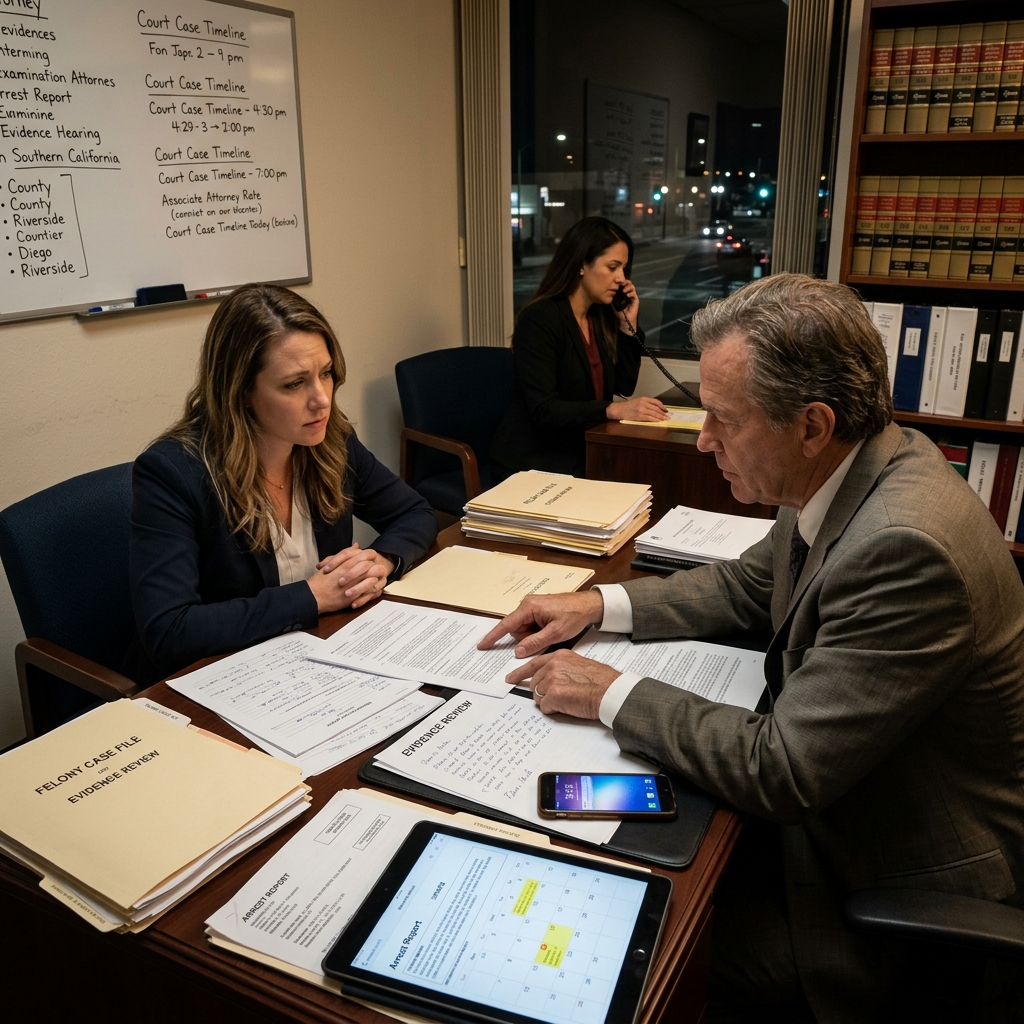
Immediate priority: If a warrant is active against you, we can address it strategically. Turning yourself in blindly often leads to immediate custody. Let us coordinate with the court first.
7. Accessing 24/7 Legal Support Without Financial Hardship
Cost is often why people face felony charges without adequate representation. Public defenders are underfunded and overloaded. Private attorneys are expensive. We bridge this gap.
We offer 24/7 free consultations because your rights matter immediately, not during business hours. We also structure affordable flat-fee pricing and flexible payment plans so that cost is never a barrier to defending yourself properly. You should not have to choose between paying rent and hiring competent counsel.
Our caseload is deliberately limited. We do not accept more cases than we can handle aggressively. This means when you hire us, you get strategic, personal representation from attorneys who know every detail of your file, not a rotating cast of overworked staff.
As a San Diego criminal defense attorney firm serving all of Southern California, we’ve built our practice on accessibility and accountability. Your case matters. Your freedom and record matter. And your ability to afford representation should not determine whether you receive strategic, fighting defense.
Take action today: Call or message us now for your free 24/7 consultation. Discuss your charges, your concerns, and what a real defense strategy looks like for your specific situation. The sooner you have an advocate in your corner, the more options remain open.
Frequently Asked Questions (FAQ)
What should I do immediately after arrest to protect my rights?
We advise our clients to invoke their right to remain silent and request an attorney before answering any police questions, as statements made without counsel present can severely damage your case. Don’t consent to searches of your person, vehicle, or property without a warrant. Contact us immediately at 24/7 for a free consultation so we can begin safeguarding your rights from the moment you’re detained.
How can we help avoid incarceration on felony charges?
We employ multiple strategic approaches tailored to your specific charges, including challenging evidence quality, negotiating favorable plea agreements, presenting sentencing alternatives to the court, and pursuing case dismissals when prosecution evidence is weak. Our goal is always to minimize or eliminate custody time while protecting your long-term interests and future opportunities.
What’s the difference between going to trial versus accepting a plea agreement?
We evaluate both paths thoroughly by analyzing prosecution evidence strength, witness credibility, and your specific circumstances to determine which route minimizes your risk. Trial offers the chance for acquittal but carries higher stakes if convicted, while a negotiated plea typically results in reduced charges or sentences with more predictable outcomes. We’ll guide you through this critical decision with complete transparency about the advantages and risks of each option.
Leave a Reply