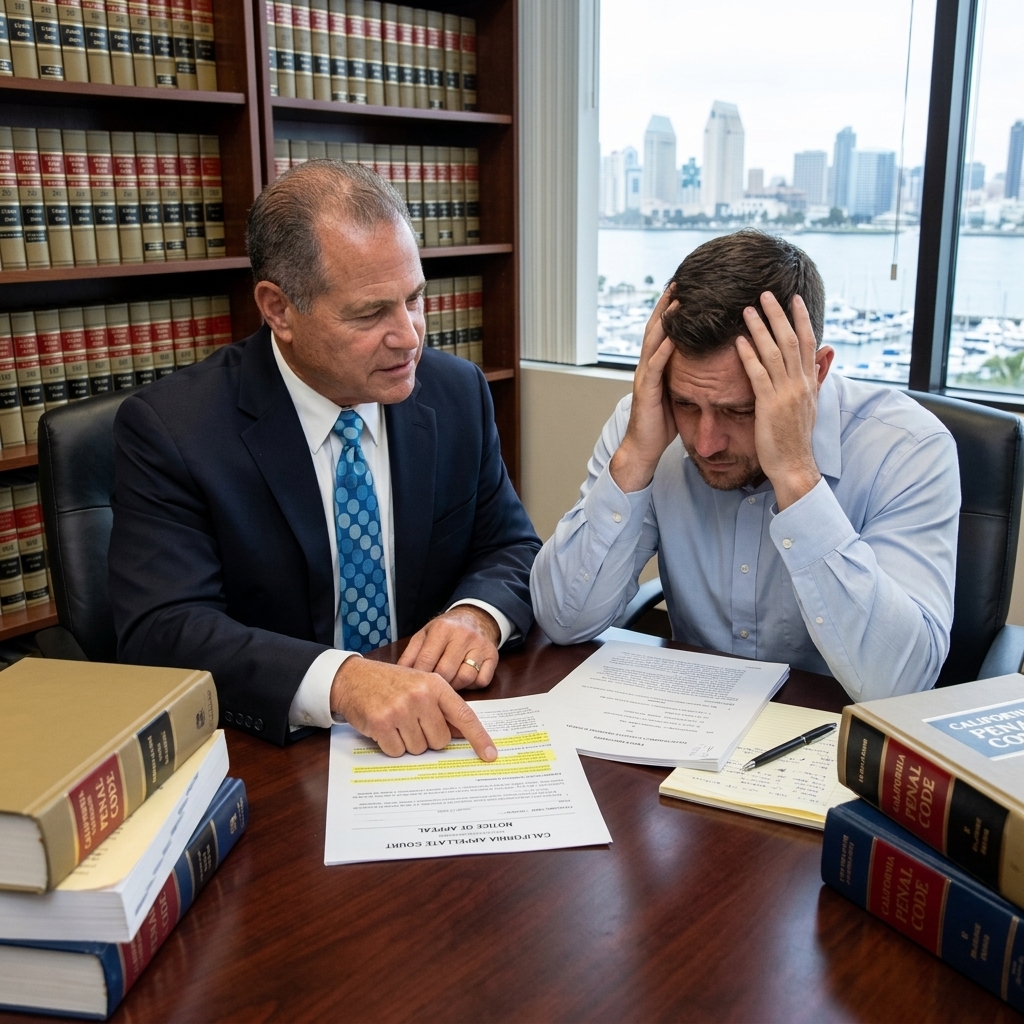
A violent felony conviction feels final. The gavel has come down. You’ve been sentenced. But conviction isn’t the end of your legal options, and many convictions contain reversible errors that appellate courts recognize and overturn regularly. At the Law Offices of Victor Orsatti, we focus exclusively on violent felony appeals for San Diego County defendants who refuse to accept an unjust outcome without a fight.
Appellate law requires a completely different skill set than trial defense. While trial lawyers build relationships with juries and judges, appellate attorneys construct arguments on paper, reading trial transcripts for procedural errors, constitutional violations, and evidentiary mistakes that trial counsel may have missed or failed to preserve properly.
Violent felony cases carry particularly high stakes. A conviction for assault, robbery, homicide, or sexual assault can mean decades in prison and permanent consequences to employment, housing, and family relationships. The appellate record must be perfect because appellate courts won’t consider new evidence; they evaluate only what happened at trial and whether it violated your constitutional rights.
We’ve handled dozens of violent felony appeals across San Diego County. We know which judges tend to uphold certain conviction types, how the California Court of Appeal interprets evidence rules in your jurisdiction, and which legal theories have worked for similar defendants facing similar charges. This specialized experience directly impacts whether we spot the reversible error that could save your case.
What to do next: If you’ve been convicted of a violent felony and your trial attorney hasn’t discussed appeal options, contact us immediately. Waiting costs you time and may result in forfeited appellate claims.
The Critical Window: Understanding Appeal Deadlines and Procedures in California
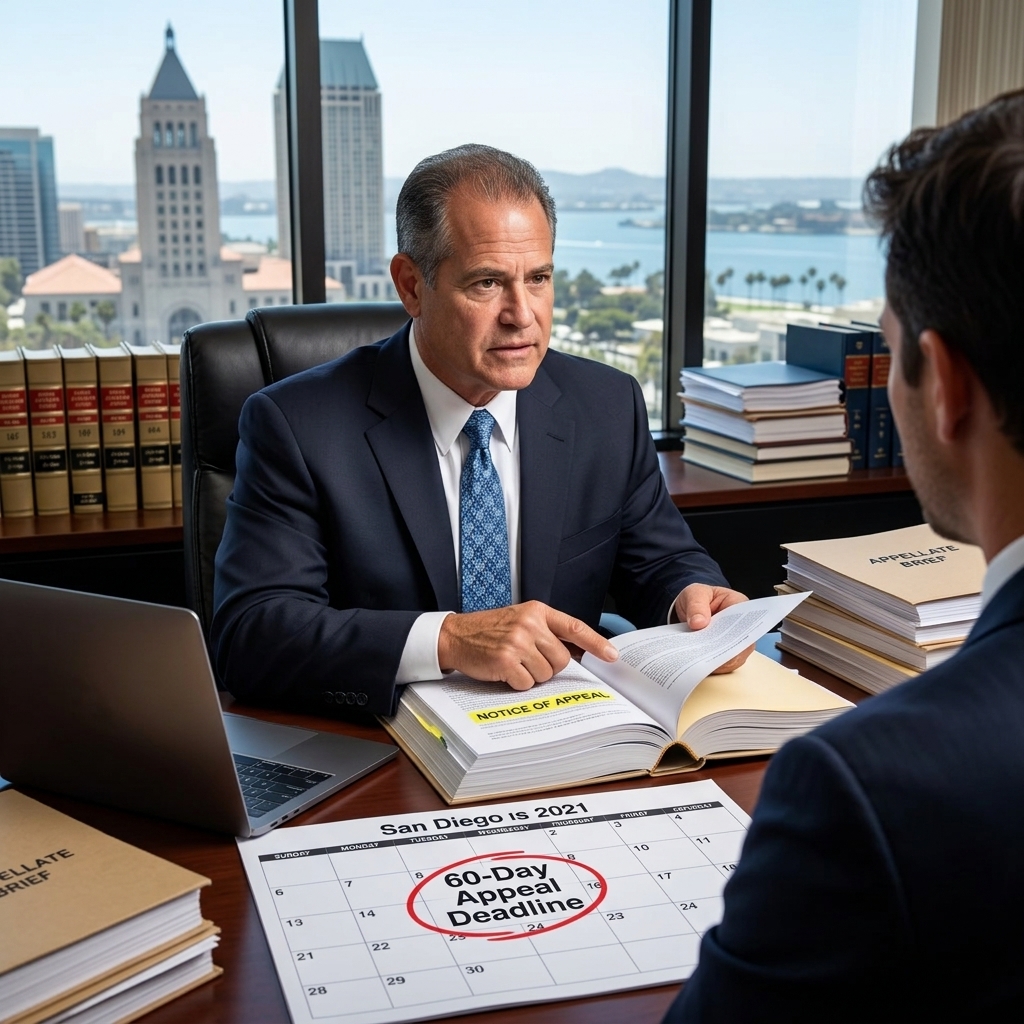
California gives you only 60 days from sentencing to file a Notice of Appeal. Miss that deadline, and your right to appeal vanishes unless extraordinary circumstances apply. This isn’t negotiable; it’s a hard stop.
Once we file your Notice of Appeal, the trial court clerk prepares the appellate record—all documents, transcripts, and exhibits from your case. This process typically takes three to six months. During this time, we’re preparing what’s called a “Writ of Habeas Corpus” if we need immediate relief, or we’re organizing our appellate brief strategy.
The appellate brief is your case in written form. We have strict page limits (typically 14,000 words) to convince three appellate justices that the trial court made reversible error. The prosecution files a responding brief, and if the court wants to hear oral argument, we present our strongest points directly to the judges.
In San Diego County’s appellate division, timelines vary depending on court workload. Most cases take 12 to 24 months from filing to decision. Your case isn’t delayed because of neglect; it’s the normal pace of careful appellate review.
What to do next: Document your sentencing date and file your appeal within 60 days. We can advise whether filing a Notice of Appeal is still possible even if you believe you’ve missed the deadline.
How We Identify Winning Arguments in Your Violent Felony Case
Not every trial error deserves appellate attention. We distinguish between errors that were “harmless” (unlikely to change the outcome) and errors that were “reversible” (likely to have changed the trial’s result). This is where our specialized experience matters most.
We begin by reading the entire trial transcript, word for word. We’re looking for:
Instructional errors: Did the judge give the jury incorrect legal instructions that misled them about the law?
Evidentiary problems: Was critical evidence admitted improperly, or was exculpatory evidence kept from the jury?
Prosecutorial statements: Did the prosecutor make inappropriate arguments that inflamed the jury?
Witness credibility issues: Did a key witness testify in a way that was later proven unreliable?
Consider a robbery conviction where the prosecution presented eyewitness identification as its cornerstone. If the photo lineup was suggestive, or if the witness received improper feedback after identifying you, California courts now recognize these as potential grounds for reversal under current eyewitness reliability standards.
We also review sentencing documents. Many violent felony sentences contain errors because judges imposed enhancements that didn’t legally apply or failed to properly calculate credits for time served.
What to do next: Gather all trial documents and sentencing orders. We’ll analyze these at no charge during your free consultation to identify potential appellate strengths.
Prosecutorial Misconduct and Evidence Violations We Challenge on Appeal
Prosecutors have ethical obligations to present evidence fairly and disclose exculpatory information. When they don’t, appellate courts take it seriously, especially in violent felony cases where public safety concerns might otherwise cloud judgment.
We’ve challenged convictions where:
Brady violations occurred: The prosecution withheld evidence favorable to the defense (such as witness credibility issues or lab results suggesting innocence).
Improper closing arguments poisoned the trial: The prosecutor asked the jury to convict based on sympathy, speculation, or facts not in evidence.
Destructive evidence was lost: Police or prosecution failed to preserve potentially exculpatory evidence (like body camera footage or cell phone records).
Prosecutorial misconduct doesn’t require malice. It simply means the prosecution’s conduct fell below professional standards in ways that affected the trial’s fairness. Appellate courts reverse convictions for this reason regularly because the integrity of the judicial process depends on fair prosecution.
In San Diego County violent felony cases, we’ve seen situations where gang expert testimony was allowed despite the expert’s questionable qualifications, or where prior conviction evidence was admitted in a way that unfairly prejudiced the jury against you.
What to do next: Tell us specifically about any evidence you believe was withheld, mishandled, or presented unfairly. These details often form the foundation of successful appeals.
Inadequate Legal Representation at Trial as Grounds for Reversal
If your trial attorney provided constitutionally deficient representation, you have grounds for appeal under Strickland v. Washington, a landmark U.S. Supreme Court case. This doesn’t mean your attorney was inexperienced or nice to the prosecutor. It means your attorney made decisions that fell below the standard of competence expected of criminal defense attorneys.
Common inadequate representation issues include:
Failure to investigate: Your attorney didn’t interview available witnesses or pursue obvious leads suggesting innocence.
Failure to file motions: Critical pretrial motions challenging evidence or police conduct weren’t filed.
Weak cross-examination: Your attorney didn’t aggressively challenge prosecution witnesses.
Poor trial strategy: Your attorney made choices that abandoned your best defense theories.
Strickland claims are complex because you must show not only that your attorney’s performance was deficient but also that this deficiency prejudiced your defense (likely changed the outcome). We evaluate trial transcripts carefully to spot when attorneys fell below reasonable standards.
We’ve successfully appealed violent felony convictions where prior counsel failed to challenge suspect identifications, didn’t explore mental state defenses, or neglected to preserve certain legal issues for appeal.
What to do next: Review your trial strategy with us. If you believe your attorney mishandled your case, we’ll evaluate whether an inadequate representation claim strengthens your appeal.
Sentencing Errors We Fight to Reduce Your Prison Time
Even if the conviction stands, sentencing errors sometimes don’t. California has complex rules about which enhancements apply, how much credit you receive for time served, and whether consecutive versus concurrent sentences were proper.
Recent changes to sentencing law have opened new appellate opportunities. For example, Senate Bill 1437 changed how prosecutors charge murder when a defendant didn’t personally kill anyone but participated in a robbery or burglary where someone died. If you were convicted under the old “felony murder rule,” you may qualify for resentencing under the new standard.
Similarly, California’s “realignment” laws sometimes require courts to recalculate credits or reduce sentences based on current law, even if the original sentencing followed the rules that existed then.
We review every sentencing transcript and order to identify:
Illegal enhancements: Were gang, firearm, or great bodily injury enhancements properly proven?
Credit calculation errors: Did the court correctly calculate presentence custody credits and good time credits?
Statutory violations: Did the law require the judge to strike certain enhancements or impose concurrent rather than consecutive sentences?
What to do next: Send us a copy of your sentencing order and all sentencing documents. We’ll determine whether sentencing resentencing opportunities exist independent of whether we win a conviction reversal.
Our Proven Appellate Strategy for San Diego Violent Felony Cases
Our approach combines meticulous document review with strategic legal research focused on San Diego County appellate precedent. We don’t file routine, generic appeals. We identify the two or three strongest legal arguments and present them persuasively to judges who’ve heard similar arguments before.
Here’s how we work:
Complete transcript analysis: We read every word to identify errors, inconsistencies, and legal violations.
Legal research: We research current California appellate law relevant to your specific charges and circumstances.
Appellate brief drafting: We write a compelling brief that puts your strongest arguments first and anticipates prosecution counterarguments.
Oral argument preparation: If the court grants oral argument, we prepare extensively to answer judges’ questions with confidence and precision.
Post-decision strategy: If we win, we manage resentencing or remand proceedings. If we lose, we evaluate whether further appeals (such as to the California Supreme Court) are viable.
We’ve reviewed hundreds of violent felony trial transcripts. This experience lets us spot issues quickly and understand which arguments resonate with San Diego appellate judges.
What to do next: Schedule a free consultation where we’ll outline our specific strategy for your case, not vague generalities about appellate procedure.
What to Expect During the Appellate Process With Our Firm
The appellate process unfolds in phases, and understanding each one reduces anxiety and helps you stay informed.
Phase One: Appeal Perfection (Months 1-6) You stay in custody while the trial court assembles the appellate record. You’ll communicate with us about case details and potential arguments. This is when we begin preliminary research.
Phase Two: Brief Writing (Months 6-12) We draft your appellate brief and submit it to the court. You’ll review drafts and approve final language. The prosecution simultaneously prepares its responding brief.
Phase Three: Waiting and Oral Argument (Months 12-18) The court reviews briefs and decides whether oral argument will occur. If it does, we’ll prepare you for what to expect (though you won’t speak; only we will).
Phase Four: Decision (Months 18-24) The appellate court issues its decision. Outcomes vary: reversal with remand for new trial, reversal with remand for resentencing, affirmation (conviction upheld), or dismissal of charges.
Throughout this process, we keep you updated. You won’t wonder whether we’re working your case. Regular communication is part of our service.
What to do next: Ask us about our communication style and how often we’ll contact you with updates during your appeal.
Success Stories: How Our Appeals Have Changed Clients’ Lives
Our case results demonstrate the real-world impact of appellate victories. We’ve won reversals on violent felony convictions where trial counsel failed to investigate proper defenses. We’ve secured resentencing in cases where illegal enhancements inflated sentences. We’ve identified Brady violations and prosecutorial misconduct that convinced appellate courts to overturn convictions.
One client convicted of aggravated assault had a conviction reversed because the trial judge gave the jury incorrect instructions about self-defense. The appellate court ruled that under proper instructions, a reasonable jury might have acquitted. He was retried, and the charges were dismissed.
Another client serving 15 years for a drug-related robbery benefited from sentencing law changes. We filed an appellate brief arguing that under current law, his sentence should be reduced. The court agreed, and his sentence was cut by five years.
These aren’t statistical claims. They’re real outcomes that changed clients’ lives, shortened prison terms, and preserved opportunities for employment, family relationships, and rebuilding after conviction.
What to do next: Review our case results online to see the types of violent felony appeals we’ve successfully handled.
Your Path Forward: Securing Experienced Appellate Defense Today
If you’ve been convicted of a violent felony in San Diego County, your appeal timeline is narrowing. Sixty days from sentencing is your window to file a Notice of Appeal. Even if you believe that deadline has passed, contact us immediately to explore whether it can be restored.
We offer free 24/7 consultations specifically designed to evaluate your case’s appellate potential. We’ll review your conviction, discuss errors we identify, and explain realistic outcomes you can expect. We work on affordable flat-fee pricing and offer flexible payment plans so cost doesn’t prevent you from accessing appellate counsel.
Violent felony convictions are serious, but they’re not always final. Appellate courts reverse convictions regularly when they identify constitutional violations, evidentiary errors, or inadequate representation. Our job is finding those errors and presenting them persuasively to judges who have the power to change your sentence or order a new trial.
Contact the Law Offices of Victor Orsatti today. We’re ready to fight your violent felony appeal and pursue the outcome you deserve.
Frequently Asked Questions (FAQ)
What makes violent felony appeals different from other criminal appeals?
Violent felony convictions carry uniquely severe consequences, which is why we approach these cases with specialized appellate strategies. We examine trial records for procedural errors, evidentiary violations, and ineffective counsel that may not be apparent in standard misdemeanor or non-violent felony appeals. Our focus is identifying reversible errors that can result in case dismissal, reduced charges, or a new trial with a stronger defense position.
How quickly do we need to file an appeal after conviction?
We must file a notice of appeal within 60 days of sentencing in most California cases, which is a critical deadline we never miss. If this window closes, we can petition the court for relief, but acting fast gives us the strongest foundation for your appellate case. When you contact us, we immediately assess your conviction date and begin the appeal process to protect your rights.
What specific trial errors do we challenge on appeal in violent felony cases?
We scrutinize prosecutorial misconduct, improper evidence handling, judicial bias, and inadequate legal representation at trial. We also examine sentencing calculations for errors that may have inflated your prison time. Each appeal we pursue is built on concrete legal violations we identify in the trial record, not speculation.