
First-Time Offender Diversion Programs: Your Path to Avoiding a Permanent Record
22
Apr
First-Time Offender Diversion Programs: Your Path to Avoiding a Permanent Record
Table of Contents
- Why First-Time Offenders Need Strategic Diversion Planning
- How Diversion Programs Protect Your Future in Southern California
- Felony Diversion vs. Misdemeanor Diversion: Understanding Your Options
- Drug Court and Treatment-Based Programs We Navigate
- PC 1000 Drug Diversion and Prop 36 Opportunities
- Probation Violation Risks During Diversion Program Participation
- Expungement After Successful Diversion Completion
- Building Your Defense Strategy Around Diversion Eligibility
- How We Secure Diversion Program Enrollment for Our Clients
- Timeline and Costs: What to Expect Through the Process
Why First-Time Offenders Need Strategic Diversion Planning
A first arrest creates immediate pressure to resolve your case quickly. What many people don’t realize is that how you respond in those early weeks fundamentally shapes whether this charge becomes a permanent part of your record or an opportunity for a fresh start.
Diversion programs exist specifically for situations like yours. Rather than proceeding through traditional criminal prosecution, these programs allow eligible first-time offenders to complete specific requirements in exchange for case dismissal. The stakes are clear: pursue the right strategy now, and your arrest may never appear on a background check. Take the wrong approach, and you’re managing a criminal conviction for years to come.
The critical difference lies in planning. Many defendants accept whatever arrangement is initially offered without understanding whether diversion eligibility applies to their charges. We focus on identifying every available pathway to keep your record clean, starting with a thorough analysis of your specific offense and background.
Next step: Request a free consultation within 24 hours to assess whether diversion programs qualify for your situation.
How Diversion Programs Protect Your Future in Southern California
In Southern California counties, diversion represents one of the most powerful tools for first-time offenders. When you successfully complete a diversion program, the prosecution typically agrees to dismiss your charges entirely. This outcome is vastly different from pleading guilty to a reduced charge, where a conviction still remains on your record.
Here’s what diversion accomplishes:
- Eliminates the conviction from your criminal history entirely (not just reduces it)
- Restores your ability to answer “no” on employment applications asking about criminal history
- Protects professional licensing opportunities in healthcare, education, finance, and engineering fields
- Removes barriers to housing, student loans, and immigration proceedings
- Prevents collateral consequences like driver’s license suspension or firearm restrictions
The counties we serve across San Diego, Orange, Riverside, San Bernardino, and Imperial all recognize diversion as a legitimate path forward. However, eligibility depends on several factors: the specific charge, your prior history, the prosecution’s willingness to participate, and the judge’s discretion in your jurisdiction.
We navigate these regional variations strategically. A misdemeanor theft case handled in San Diego County follows different procedures than the same charge prosecuted in Riverside County, and diversion availability varies accordingly.
Felony Diversion vs. Misdemeanor Diversion: Understanding Your Options
Not all diversion programs function the same way. The distinction between felony and misdemeanor diversion programs determines what you’ll face during your case and what outcomes are realistically achievable.
Misdemeanor diversion typically involves lower-level offenses: simple assault, petty theft under $950, trespassing, or disorderly conduct. These cases move through diversion with relative speed, usually requiring 6 to 12 months of program participation and conditions like community service, counseling, or fines. The case is then dismissed.
Felony diversion applies to more serious charges: drug possession for sale, grand theft, DUI with injury, or certain violent crimes. Felony diversion programs demand substantially more from participants. You might spend 18 to 36 months fulfilling program requirements, including intensive supervision, regular court appearances, mandatory counseling or treatment, and compliance monitoring. The payoff is equally significant: dismissal of a felony charge that could have resulted in prison time.
Felony diversion doesn’t exist uniformly across all Southern California courts. Some judges are receptive to felony diversion arguments while others rarely grant them. We assess your specific judge and prosecutor to determine realistic diversion pathways before we recommend a direction.
The difference matters enormously for your future. A dismissed felony through diversion is far better than a felony conviction, but significantly different from having a misdemeanor dismissed. We help you understand what each option means for your long-term livelihood.
Drug Court and Treatment-Based Programs We Navigate
If your charge involves substance use, drug court represents a specialized diversion pathway that we work with regularly across our service areas. Drug court prioritizes treatment over incarceration, operating under the premise that many drug-related offenses stem from addiction rather than criminal intent.
Drug court participants attend regular court appearances, submit to drug testing, engage in mandatory substance abuse treatment (inpatient or outpatient depending on severity), and work toward employment or educational goals. The process typically spans 12 to 24 months with increasing privileges as you demonstrate compliance.
The advantage is substantial: you address the underlying issue driving your case while the court monitors your progress. Successful completion results in charge dismissal and graduation from the program, often with courtroom recognition of your achievement.
However, drug court requires genuine commitment. Missed drug tests, treatment sessions, or court dates result in sanctions ranging from additional community service to custody jail time. We’re transparent about this reality because we’ve seen clients succeed and others struggle. The program works best for individuals genuinely motivated to change their substance use patterns.
We also navigate deferred entry of judgment (DEJ) programs in some jurisdictions, which operate similarly but with slightly different eligibility criteria and completion requirements. The specifics depend heavily on which county prosecutes your case.
PC 1000 Drug Diversion and Prop 36 Opportunities
California’s Penal Code 1000 (PC 1000) established one of the nation’s first drug diversion statutes specifically designed to redirect first-time nonviolent drug offenders away from the criminal justice system. If you’re charged with simple drug possession, transportation for personal use, or certain drug paraphernalia offenses, PC 1000 diversion may be available.
The requirements are straightforward: you must have no prior drug convictions, no prior serious or violent felony convictions, and the current charge must involve possession for personal use rather than sales or trafficking. If eligible, the court defers prosecution while you complete drug treatment or counseling and remain arrest-free for a specified period (usually 18 months to two years).
Prop 36, formally the Substance Abuse and Crime Prevention Act, offers a similar but broader mechanism. It allows judges to sentence certain drug offenders to probation with mandatory drug treatment rather than incarceration. While technically a sentencing alternative rather than pure diversion, Prop 36 achieves comparable outcomes: treatment participation leading to eventual charge reduction or dismissal.
The practical difference: PC 1000 requires prosecutor agreement and judge approval before charges are formally dismissed. Prop 36 can sometimes be imposed even if the prosecutor opposes treatment as an alternative. Both lead to record expungement after successful completion, making your arrest functionally invisible for employment, housing, and professional purposes.
We assess which pathway better serves your specific situation based on your charges, background, and the stance your prosecutor takes on treatment alternatives.
Probation Violation Risks During Diversion Program Participation
The path through diversion isn’t automatic once you’re enrolled. We’re frank about this: probation violations during diversion participation can derail your case entirely and result in criminal conviction.

Common violation scenarios we’ve managed include:
- Positive drug test when diversion requires drug-free status
- Missed treatment sessions, counseling appointments, or court dates
- New arrest or police contact (even minor contact like a traffic stop with citation)
- Failure to complete community service hours or pay restitution on schedule
- Moving to a different county without permission or failing to notify your probation officer
When violations occur, prosecutors can move to terminate diversion and proceed with prosecution. Instead of case dismissal, you face trial or the option to plead guilty to the original charge. The difference between diversion completion and a probation violation can mean the difference between a clean record and a permanent conviction.
We support our clients by providing clear written expectations, regular check-ins about program compliance, and immediate intervention if violations become possible. Think of us as your accountability partner. When complications arise, we appear before the judge to request probation violations be dismissed or handled leniently, demonstrating your commitment to the program.
This level of support isn’t standard. Many public defenders handle hundreds of cases and can’t provide the individualized attention diversion participation demands. Our approach ensures you understand every requirement and have someone actively working to keep your diversion on track.
Expungement After Successful Diversion Completion
Upon successful completion of a diversion program, the prosecution files a motion to dismiss charges, and the judge signs off. That dismissal is the beginning of another important process: ensuring your record reflects the dismissal cleanly.
California law allows (and in many cases requires) expungement of dismissed cases under Penal Code 1203.4. Expungement doesn’t erase the arrest from law enforcement databases, but it formally closes the case and allows you to legally answer “no” when asked whether you’ve been arrested or convicted of a crime.
The distinction matters practically. When you apply for employment, professional licensing, or housing, standard background checks reflect expunged arrests as “dismissed” or “case closed” rather than showing an active criminal conviction. This difference is enormous.
We handle the expungement filing process automatically for clients completing diversion. Many defendants don’t realize this step is necessary, and without it, the conviction technically remains on their record despite case dismissal. We ensure your paperwork is filed properly, often without additional cost to you.
Expungement also enables petition relief under recent criminal justice reform laws like Prop 47 (which reduced certain felonies to misdemeanors). If you completed diversion on a charge that now qualifies under Prop 47, additional record relief may be available.
Building Your Defense Strategy Around Diversion Eligibility
Not every case qualifies for diversion, and eligibility determinations require careful legal analysis. This is where our strategic approach distinguishes our work.
We examine your case through multiple lenses: What is the actual charge? Does your prior record (if any) disqualify you? What’s the judge’s historical position on diversion? How likely is the prosecutor to agree? Are there alternative charges that might be more diversion-friendly?
For example, a client charged with theft facing felony prosecution might become eligible for misdemeanor diversion if we negotiate a charge reduction first. Another client with a drug sales charge might pursue PC 1000 diversion if evidence supports arguing the drug amount was for personal use rather than distribution.
Your defense strategy isn’t separate from diversion planning; it’s intertwined. Every negotiation, every motion we file, every piece of evidence we challenge serves the ultimate goal of positioning you for diversion enrollment and successful completion.
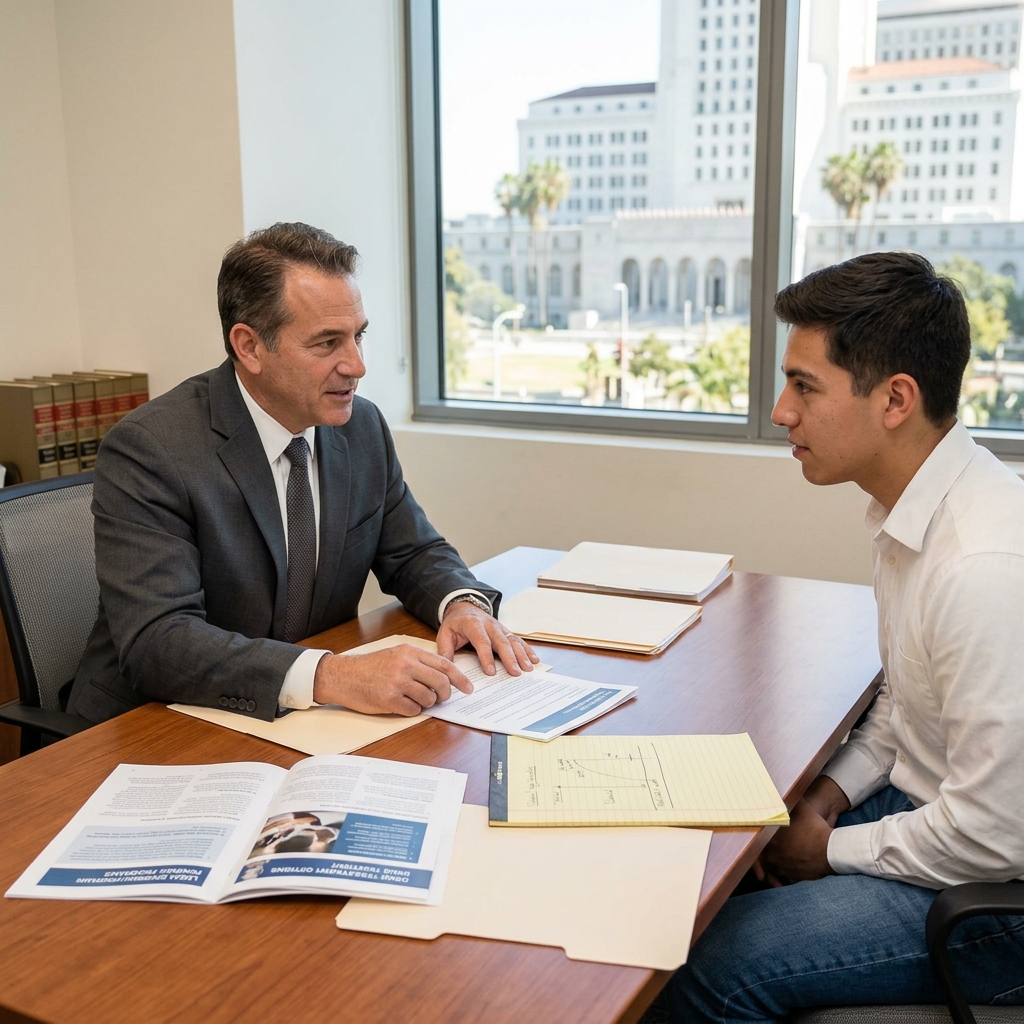
We also assess whether diversion is actually the optimal path for your situation. For some clients, other defense strategies (acquittal at trial, suppression of evidence, prosecution weakness) offer better outcomes than diversion. Our role is giving you honest analysis so you make informed decisions.
How We Secure Diversion Program Enrollment for Our Clients
Once we determine diversion eligibility, our next step is persuading the prosecution and court that your case belongs in diversion rather than traditional prosecution.
This involves several tactical moves:
- Filing pretrial motions to establish diversion eligibility and your suitability for the program
- Presenting evidence of your stability, employment, family ties, and community connections
- Demonstrating rehabilitation potential and low recidivism risk
- Negotiating directly with the prosecutor to secure their agreement to pursue diversion
- Preparing you to address the judge effectively about your commitment to successful completion
We also coordinate with treatment providers, community service organizations, and counseling services before you appear in court. When judges see that you’ve already connected with appropriate resources and demonstrated genuine readiness, enrollment becomes far more likely.
As a criminal defense attorney in San Diego and throughout Southern California, we’ve built relationships with judges, prosecutors, and diversion coordinators in every county we serve. These relationships translate to earlier case resolution and better outcomes for our clients.
Timeline and Costs: What to Expect Through the Process
Understanding the financial and time investment helps you plan appropriately.
Timeline breakdown:
Initial consultation and case assessment happens within 24 hours of your call. Diversion eligibility analysis and prosecution negotiation typically takes 4 to 8 weeks. Court approval and enrollment can add another 2 to 4 weeks. Program participation then spans 6 months to 3 years depending on the specific program. Post-completion expungement filing occurs immediately after dismissal.
Cost structure:
Program costs vary significantly. PC 1000 drug diversion typically costs $1,500 to $3,500 including treatment and probation supervision. Drug court might range from $4,000 to $8,000 annually during participation. Misdemeanor diversion runs $2,000 to $5,000 depending on required community service and counseling hours.
We offer flat-fee representation on diversion cases starting at competitive rates that reflect the value of keeping your record clean. We also structure flexible payment plans to accommodate your financial situation. Our 24/7 availability means you can connect with us immediately rather than waiting weeks for your first meaningful conversation about your options.
The investment in proper diversion representation pays dividends. Compare legal costs against the lifetime consequences of a criminal conviction: lost job opportunities, professional licensing barriers, housing discrimination, and educational restrictions. Diversion through our guidance costs far less than managing a permanent record.
Contact us today for your free consultation. We’ll analyze your specific charges, assess diversion eligibility, and outline exactly what your path forward looks like. Your record and future are too important to navigate alone.