Top Technical Defenses for Misdemeanor DUI Charges in Indio
28
Oct
Top Technical Defenses for Misdemeanor DUI Charges in Indio
Table of Contents
- Understanding Your DUI Challenge in Indio
- Why Technical Defenses Matter for Your Case
- Breath Test Calibration and Accuracy Issues
- Field Sobriety Test Reliability and Challenges
- Blood Test Procedure and Chain of Custody Violations
- Traffic Stop Legality and Constitutional Violations
- Police Report Inconsistencies and Documentation Errors
- How Our Technical Defense Strategy Protects Your Future
- Why We Stand Apart from Other Defense Approaches
- Your Path Forward with Our Expert Representation
- Frequently Asked Questions (FAQ)
Understanding Your DUI Challenge in Indio
A misdemeanor DUI arrest in Indio carries weight that extends far beyond the initial booking. You face potential jail time, license suspension, mandatory DUI programs, fines, and a criminal record that can affect employment, housing, and professional licensing. The difference between conviction and dismissal often hinges on the technical integrity of the evidence against you.
Indio and the surrounding Riverside County area present specific prosecution patterns and local court dynamics. We’ve handled hundreds of cases in these jurisdictions and understand how officers conduct traffic stops, administer field tests, and process breath and blood samples. Many arrests contain recoverable defects that prosecutors and judges may overlook unless your defense counsel actively identifies and challenges them.
Technical defenses focus on the procedural, scientific, and constitutional weaknesses in how law enforcement gathered, tested, and documented evidence. Rather than disputing what happened, we attack how it was proven, where prosecution witnesses often have no credible answers.
Why Technical Defenses Matter for Your Case
The prosecution must prove guilt beyond reasonable doubt. That burden doesn’t ease because you admitted to drinking or performed poorly on field sobriety tests. What matters is whether the evidence used to convict you meets legal and scientific standards.
Technical defenses accomplish several critical goals:
- Challenge the reliability of breath and blood test results, creating reasonable doubt about your actual BAC
- Expose procedural violations that may lead to evidence exclusion under California law
- Demonstrate that constitutional rights were violated during the traffic stop or arrest
- Force the prosecutor to prove every element of the offense with admissible evidence
- Provide leverage for negotiation or create reasonable doubt for trial
We’ve seen cases dismissed outright when breath test machines lacked proper calibration records or when officers failed to observe the mandatory 15-minute deprivation period. Other cases result in reduced charges when field sobriety test procedures violated standardized guidelines. The goal is straightforward: either eliminate the strongest evidence against you or create sufficient doubt that conviction becomes impossible.
Breath Test Calibration and Accuracy Issues
Breath testing machines measure ethanol content and calculate blood alcohol concentration through complex chemical and electronic processes. If the machine wasn’t properly calibrated, the result is scientifically meaningless. California law requires specific maintenance records, regular calibration checks, and operator certification.
Common calibration defects include:
- Missing or incomplete maintenance records showing required calibration intervals
- Expired certification on the operator administering the test
- Lack of documentation proving the specific machine used was certified for use that day
- Failure to perform quality control checks before or after your test
- Deviation from manufacturer specifications in how the machine was maintained
We subpoena the complete maintenance history, certification records, and logs from the arresting agency. If the records show gaps or inconsistencies, we file a motion to suppress the breath test result. Without that evidence, prosecutors often lack a foundation to prove impairment beyond speculation.
One client we represented was arrested after an Indio traffic stop. The prosecution relied entirely on a breath test showing 0.08 BAC. We discovered the breathalyzer machine hadn’t undergone the required quarterly calibration check for three months before the arrest. That single defect rendered the result inadmissible, and the case was dismissed.
Field Sobriety Test Reliability and Challenges
The Standardized Field Sobriety Tests (SFST) include the horizontal gaze nystagmus (HGN), walk-and-turn, and one-leg stand. The National Highway Traffic Safety Administration maintains specific protocols for administration and interpretation. Deviations from those protocols undermine reliability and provide defense opportunities.
We examine whether officers:
- Administered the tests on level, unobstructed surfaces as required
- Allowed adequate demonstration before evaluation
- Properly scored responses according to NHTSA guidelines
- Documented environmental conditions affecting performance (rain, darkness, uneven pavement, traffic noise)
- Considered medical or physical conditions affecting test performance
- Conducted tests after verifying no prior head injuries or inner ear problems
Field sobriety tests are inherently subjective. A sober person with balance issues, neuropathy, or previous injuries may perform identically to an impaired driver. We retain experts who testify about SFST limitations and challenge the officer’s scoring methodology in court. The video footage from patrol car cameras often reveals procedural errors invisible to the arresting officer.
Blood Test Procedure and Chain of Custody Violations
Blood tests carry greater scientific weight than breath tests, but they’re equally vulnerable to procedural defects. California law requires strict compliance with collection, storage, preservation, and testing protocols. Any break in the chain of custody creates reasonable doubt.
Critical vulnerabilities in blood test procedures:
- Improper collection technique or use of non-sterile equipment
- Delay in testing that allows samples to degrade or ferment
- Inadequate or missing preservatives in collection vials
- Failure to maintain proper storage temperature
- Gaps in documentation showing who handled the sample at each step
- Testing performed by uncertified technicians or using unvalidated methods
- Cross-contamination between samples
We file detailed discovery motions requesting all documentation related to your blood sample. We then cross-examine the phlebotomist and laboratory technician about specific procedures. If the prosecution cannot establish every link in the chain of custody beyond reasonable doubt, the test result becomes inadmissible.
Traffic Stop Legality and Constitutional Violations
Before discussing impairment at all, we examine whether the traffic stop itself was constitutional. Police cannot stop a vehicle without reasonable suspicion of criminal activity or a traffic violation. Many DUI arrests stem from pretextual stops lacking legitimate justification.
We investigate:
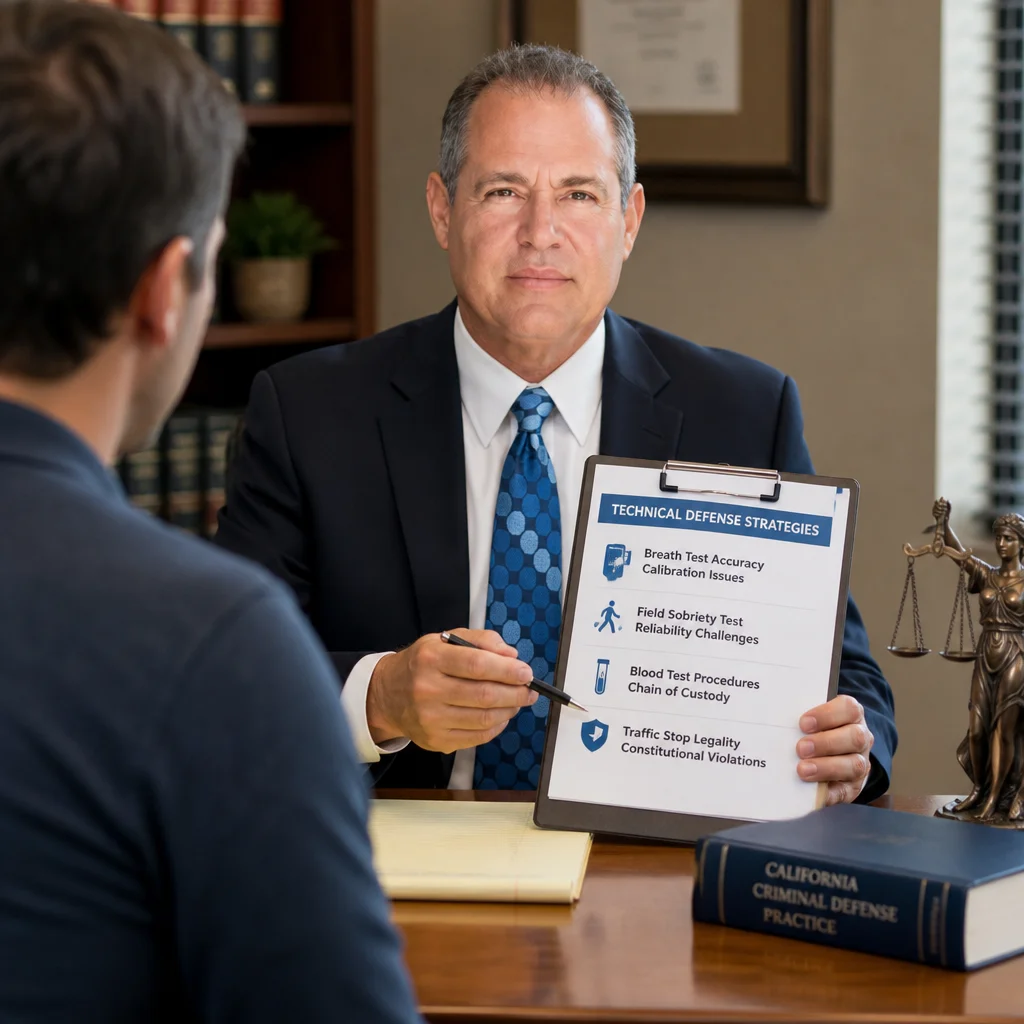
- Whether the initial traffic stop had reasonable suspicion or probable cause
- Whether the officer extended the stop beyond the time necessary to issue a citation
- Whether the officer conducted an unlawful vehicle search
- Whether statements you made during the stop were obtained after proper Miranda warnings
- Whether field sobriety tests were requested lawfully or coercively
A stop that violates your Fourth Amendment rights taints everything that follows. If we prove an illegal stop, we move to suppress all evidence obtained after that violation, often resulting in case dismissal.
Police Report Inconsistencies and Documentation Errors
Police reports are not gospel. Officers make errors, forget details, and sometimes embellish observations to justify arrests. We meticulously review every report against body camera footage, dash cam video, and dispatch records.
We look for:
- Descriptions of driving patterns that contradict the officer’s narrative
- Timing inconsistencies between dispatch records and officer observations
- Contradictions between the written report and video evidence
- Vague or conclusory statements about impairment lacking specific observations
- Officer admissions of procedural errors or uncertainty
- Discrepancies between initial field notes and final typed reports
These inconsistencies create reasonable doubt and impeach officer credibility at trial. Jurors are skeptical when the officer’s story changes or when video contradicts written statements.
How Our Technical Defense Strategy Protects Your Future
We approach every misdemeanor DUI case as a technical investigation. From the initial consultation, we request all evidence: police reports, body camera footage, dash cam video, dispatch logs, breath or blood test results, maintenance records, and arrest photos. We review this material before the preliminary hearing, identifying defects and planning our discovery strategy.
Our approach protects you by:
- Identifying all procedural violations early, allowing time for strategic motions
- Retaining independent experts to challenge scientific evidence
- Preserving your evidentiary record through proper discovery requests
- Preparing thorough motions to suppress evidence obtained unlawfully
- Developing trial strategy based on specific weaknesses in the prosecution’s case
- Negotiating from a position of strength when evidence is compromised
We’ve secured dismissals in Riverside County, San Bernardino County, and Orange County cases where prosecutors initially believed they had strong evidence. The difference was our systematic investigation of technical defenses and our willingness to challenge every assumption the prosecution made.
Why We Stand Apart from Other Defense Approaches
Many attorneys accept the prosecution’s version of events and focus solely on minimizing penalties. We reject that approach. With over 30 years of courtroom experience handling criminal defense across Southern California, we’ve developed an evidence-first methodology that challenges the foundation of every case.
Our practice differs fundamentally:
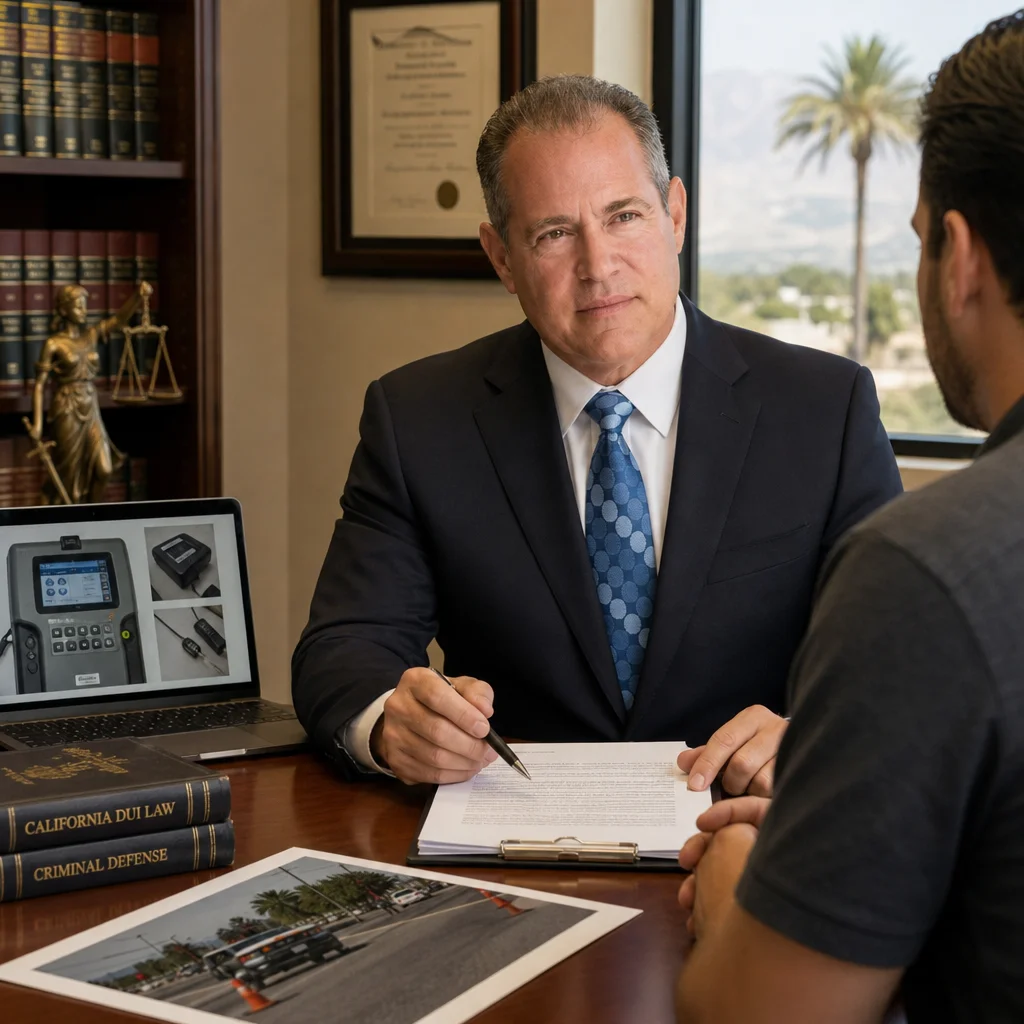
- We conduct independent investigations rather than relying on discovery materials alone
- We retain qualified experts in breath testing, toxicology, and field sobriety procedures
- We understand local Riverside County court procedures and judicial tendencies
- We leverage our relationships with prosecutors while maintaining aggressive courtroom advocacy
- We prepare every case for trial, never assuming negotiation is the only path
- We communicate directly with clients throughout the process, explaining legal strategy in plain language
When you work with us, you receive representation from someone who understands not just DUI law but the specific technical defenses that actually work. We don’t accept cases casually or handle them with a standard playbook. Each case receives individualized analysis and strategic planning tailored to its specific facts and evidence.
Your Path Forward with Our Expert Representation
If you’re facing a misdemeanor DUI charge in Indio or elsewhere in Riverside County, your next step is clear: secure a thorough legal consultation focused on identifying technical defenses. We offer DUI defense attorney consultations 24/7 at no charge, giving you immediate access to experienced analysis.
During your consultation, we’ll review the specific circumstances of your arrest, discuss the evidence the prosecution possesses, and explain which technical defenses apply to your situation. We’ll be direct about your case’s strengths and challenges, never overselling outcomes but honestly assessing your options.
We handle cases on affordable flat-fee pricing with flexible payment plans, ensuring cost doesn’t prevent you from accessing quality defense. We serve San Diego County, Riverside County, San Bernardino County, and Orange County, with deep familiarity of each jurisdiction’s courts and prosecutors.
The technical defects in DUI cases are often invisible without expert investigation. Breath machines fail calibration checks. Blood samples lack proper chain of custody. Traffic stops violate constitutional standards. Field sobriety tests deviate from required procedures. These vulnerabilities exist in many cases, but they’re only valuable when properly identified and aggressively litigated.
Contact us today to discuss your case. We’re prepared to investigate every aspect of the evidence against you and build a defense strategy grounded in technical accuracy and constitutional protection. Your future deserves representation from someone who knows how to challenge the prosecution’s case at its foundation.
Frequently Asked Questions (FAQ)
What technical defenses can we use to challenge my DUI breath test results?
We examine multiple factors that can invalidate breath test evidence, including improper calibration, maintenance records, operator certification, and whether the device was functioning correctly at the time of your test. We also challenge the observation period before testing and any violations in the administration protocol, since even small procedural errors can render the results inadmissible in court.
How do field sobriety tests impact my DUI case, and can we defend against them?
We know that field sobriety tests are subjective and often unreliable, especially considering road conditions, lighting, your physical condition, and officer training. We scrutinize the administration of these tests and present evidence of their documented flaws to undermine the prosecution’s case against you.
Why is the legality of the traffic stop crucial to our defense strategy?
We investigate whether law enforcement had valid grounds to stop you in the first place, since an illegal stop invalidates everything that follows, including breathalyzers and field tests. If we prove the officer lacked reasonable suspicion or probable cause, we can file a motion to suppress all evidence obtained after that unlawful stop, potentially leading to charge dismissal.