The Cost of Waiting: Why Timeline Matters for Your California Record
Every month your criminal record remains on file costs you something concrete. A potential employer runs a background check and finds your conviction. A landlord sees it and denies your application. Professional licenses stay out of reach. The longer you wait to address this, the more opportunities slip away.
We’ve worked with hundreds of clients across Southern California who delayed expungement by months or years, thinking they could handle it themselves. Each month of delay compounds the impact on employment, housing, and reputation. California law gives you the right to petition for expungement, but the path isn’t always straightforward.
The critical insight most people miss: timeline isn’t just about how long the process takes. It’s about how quickly you can reclaim your professional standing and move forward. When we guide clients through expungement, we’re not just clearing records. We’re restoring access to jobs, licenses, and housing that were previously blocked.
What to do next: Take inventory of opportunities you’ve already lost due to your record. Then calculate the monthly cost of that loss. This puts the real urgency into perspective.
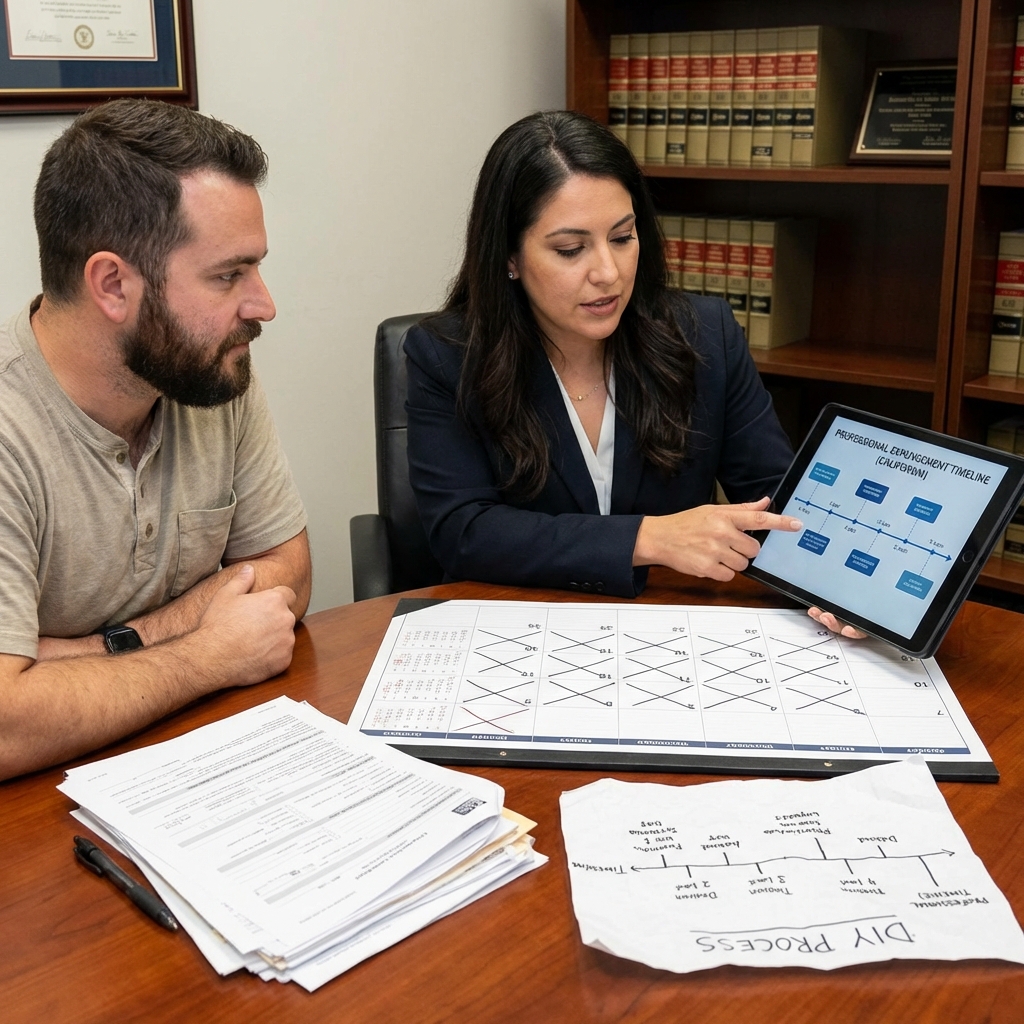
DIY Expungement Attempts vs Professional Legal Representation
The appeal of DIY expungement is obvious: you save money upfront and maintain complete control. California courts do allow self-represented petitioners, and the paperwork exists in the public domain. But we’ve seen the fallout from DIY attempts, and it’s predictable.
Self-represented petitioners often submit incomplete petitions with missing documentation. Courts reject these filings, requiring resubmission and pushing your timeline back by months. Others file in the wrong court or use outdated forms. Some don’t understand which charges actually qualify for expungement under current law, wasting time on petitions that have no chance of approval.
We recently had a client who spent four months attempting expungement on his own before coming to us. His petition was rejected twice for missing victim restitution documentation and improper legal language. We corrected everything in two weeks and had his petition approved within 60 days. That four-month delay cost him a security clearance job opportunity he couldn’t get back.
The real cost of DIY isn’t just the rejection cycle. It’s the emotional toll of navigating a legal system designed by people trained in its complexity. When you work with us, you’re paying for accuracy, speed, and the certainty that your petition will be done right the first time.
What to do next: If you’ve already started a DIY expungement, gather all paperwork and have us review it for free during your 24/7 consultation. We can quickly identify what’s working and what needs correction.
Understanding California’s Expungement Requirements and Deadlines
California expungement law changed significantly in recent years, expanding eligibility and shortening timelines. Under Penal Code Section 1203.4, most people convicted of crimes are eligible to petition for expungement, even if they completed probation years ago. Senate Bill 731 made things even more accessible, allowing expungement petitions even while you’re still on probation.
The eligibility requirements depend on your specific offense and sentence. For felonies, you generally need to complete probation before petitioning (with some exceptions). For misdemeanors, you can petition immediately after probation completion. Some serious crimes have longer waiting periods, but most charges qualify.
Where timelines get complicated is understanding the deadlines that affect your specific case. Statutes of limitations on probation violations, restitution requirements, and current court obligations all influence whether you can move forward immediately or need to wait. Missing a deadline or misunderstanding a requirement can extend your timeline by years.
We spend the first part of every consultation determining exactly what applies to your situation. What requires waiting? What can move immediately? What documentation do we need from your original case? These answers shape our entire strategy.
Illustration 1
What to do next: Gather your sentencing documents and probation completion paperwork. Have them ready for your consultation. We’ll instantly identify your eligibility status and realistic timeline.
Processing Speed: What We Achieve for Our Clients
When we take on an expungement case with all documentation complete and no complications, we typically file your petition within 10-14 days. The court then schedules a hearing, which usually occurs within 30-60 days depending on local court schedules. Most cases are approved at the hearing, and we receive the final order within 2-3 weeks.
That’s roughly 60-90 days from initial consultation to final expungement order for straightforward cases. Compare that to the 6-12 months we typically see from DIY attempts, and you understand why timeline matters.
Complex cases take longer. Multiple convictions require separate petitions. Restitution disputes or victim notification requirements add steps. But even in complicated scenarios, our structured approach moves things faster than going alone.
We’ve had clients with five separate convictions get all five expunged within four months because we coordinated the filings strategically, understanding which courts would hear cases together and which required separate processing. This level of coordination is nearly impossible without legal experience.
Your actual timeline depends on factors beyond our control: court backlogs, clarity of your original case files, and whether the prosecution contests your petition. We manage what we can control. You get weekly updates, immediate notification when courts respond, and strategic guidance on any complications that arise.
What to do next: Ask us during your free consultation about your estimated timeline for your specific charges. We’ll give you a realistic month-by-month breakdown.
Documentation and Filing Accuracy: Where Most DIY Cases Fail
The documentation requirements for California expungement are deceptively complex. You need your original charging documents, probation completion verification, proof of restitution payment, and a detailed petition using specific legal language. Miss any piece, and the court rejects the entire filing.
We’ve reviewed dozens of rejected DIY petitions. The most common problems are straightforward. People use forms from legal document websites that are outdated. They submit probation completion letters without the required court stamp. They reference charges using informal language instead of penal code sections. Courts have zero tolerance for these errors. Rejection means starting over.
Filing accuracy goes beyond format. It’s also about strategic presentation. Your petition needs to emphasize your rehabilitation, contributions to the community, and changed circumstances since conviction. A generic petition gets less favorable consideration than one tailored to your specific narrative. We craft each petition to maximize approval odds while ensuring every technical requirement is met.
We also handle all communication with the district attorney’s office, victim notification if required, and coordination with the original sentencing court. These conversations require legal knowledge of what arguments prosecutors respond to and what evidence most effectively counters opposition.
Think of documentation accuracy this way: one missing comma or misplaced sentence might seem trivial. But to a court clerk processing hundreds of petitions monthly, it triggers an automatic rejection. We eliminate that risk entirely.
What to do next: If you’re thinking about filing yourself, request all your case documents from the court first. Have them organized before your free consultation with us.
Court Petition Success Rates: Professional Representation Advantage
We don’t publish our approval rate because every client’s situation is unique. But internally, we track approval rates by charge type and circumstance. Our representation consistently achieves approval for cases we believe are viable. When we believe a case faces legitimate obstacles, we communicate that upfront rather than filing doomed petitions.
Where professional representation creates the biggest advantage is in cases where the prosecution objects. DIY petitioners often don’t know how to respond to prosecutorial opposition. They don’t understand what evidence weakens their position or strengthens it. They don’t know how to cross-examine witnesses if a hearing becomes contested.
We represent clients in contested hearings. We’ve challenged restitution claims we could prove were satisfied. We’ve presented evidence of rehabilitation that convinced prosecutors to withdraw opposition. We’ve argued sentencing circumstances that demonstrate why expungement serves justice.
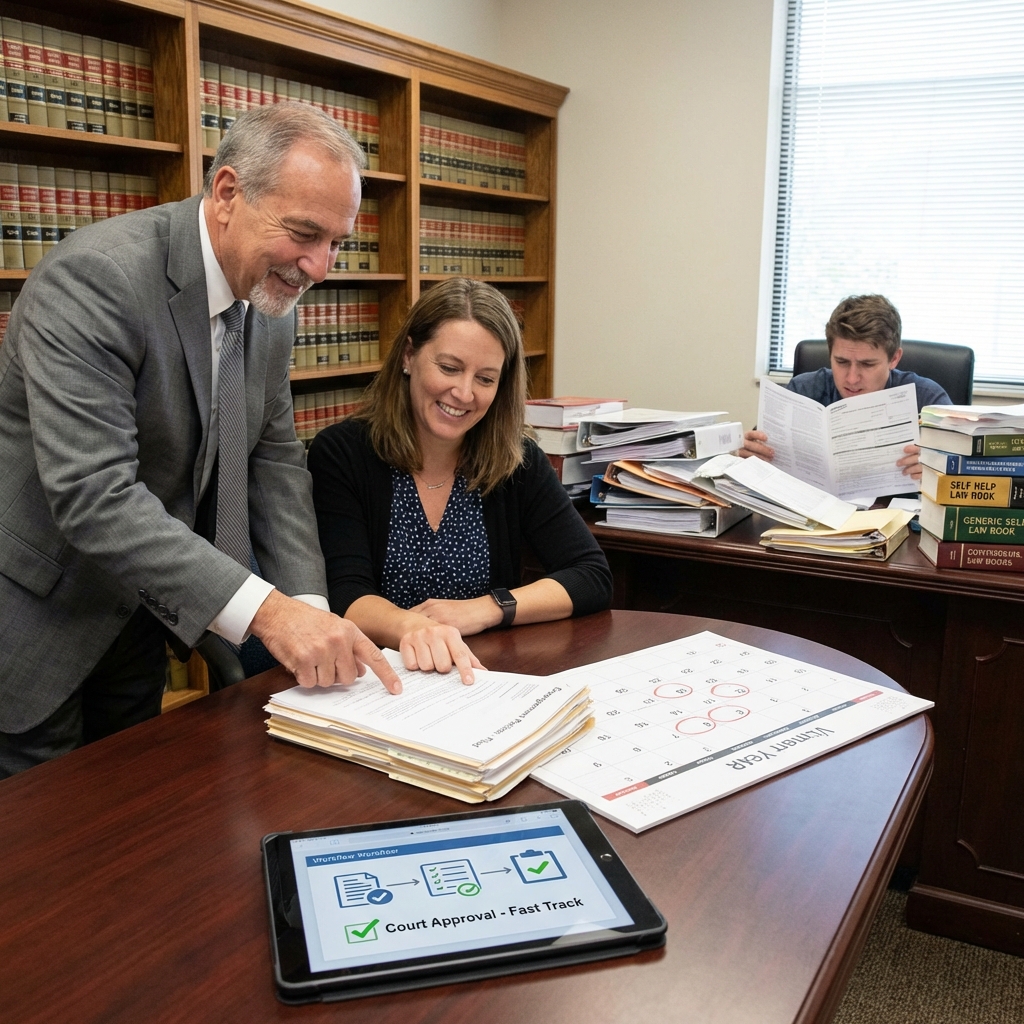
Illustration 2
Judges see the difference between self-represented petitioners navigating the system for the first time and experienced defense counsel presenting a strategic case. That experience translates to approval odds in marginal situations where the outcome genuinely could go either way.
We also understand the individual judge assigned to your petition. We know which judges are more receptive to rehabilitation arguments versus those who focus primarily on victim impact. This knowledge shapes how we present your case.
What to do next: Schedule your free 24/7 consultation and ask us directly what obstacles we anticipate in your case. Honest assessment saves you from pursuing hopeless petitions.
Common Timeline Delays We Help You Avoid
The most preventable delays happen before filing. Clients discover they still owe restitution they thought was paid. They realize their probation completion letter is missing. They learn that one charge requires a separate petition under different code sections.
We uncover these issues during the consultation process, before we waste time filing incomplete petitions. This front-end work moves your timeline forward, not back.
Another delay category is prosecutorial response. When the DA’s office objects to your petition, the case doesn’t simply proceed to hearing. There’s back-and-forth communication, submission of opposing evidence, and scheduling complications. Without legal representation, you’re navigating this alone, often not understanding what information you need or how to respond effectively.
Court scheduling delays vary by county, but we manage these strategically. Orange County courts move faster than San Bernardino for expungement petitions. We know these differences and structure filings accordingly. If your case has flexibility in which court it can be heard, we file in the venue most likely to get you a quick hearing date.
We also prevent the delay caused by filing in the wrong location. Some cases belong in the court that originally sentenced you. Others can be filed in the county where you now reside. Make the wrong choice, and you’re back at square one.
What to do next: Tell us your county of residence during consultation. We’ll confirm the optimal filing location for your case immediately.
How Our 24/7 Consultation Process Accelerates Your Expungement
You can reach us any time, day or night, because we understand that legal problems don’t operate on business hours. Someone facing a criminal record conviction doesn’t necessarily have time to call during daytime. Our 24/7 availability means you can start the process when you’re ready, not when office hours accommodate.
During your free initial consultation, we don’t just answer questions. We gather the specific details needed to build your case immediately. We’re not wasting time on unnecessary calls or follow-ups. In one conversation, we understand your charges, sentencing, probation status, employment situation, and goals.
This concentrated intake allows us to move fast afterward. We already know exactly what documents we need, which court handles your petition, and what timeline is realistic. The moment you decide to hire us, we’re already moving. Most firms waste two weeks on administrative work after hiring. We’re filing.
We also use this initial consultation to educate you about the process ahead. You understand what happens at each stage, what decisions you’ll need to make, and what to expect timeline-wise. This transparency reduces anxiety and keeps you confident in the process.
Our flat-fee pricing model means there are no surprise costs or hourly billing delays waiting for approval. You know the expense upfront. Many clients appreciate this certainty.
What to do next: Call us right now for your free consultation. Don’t overthink it or wait for “the right time.” The sooner we review your case, the sooner we can move forward.
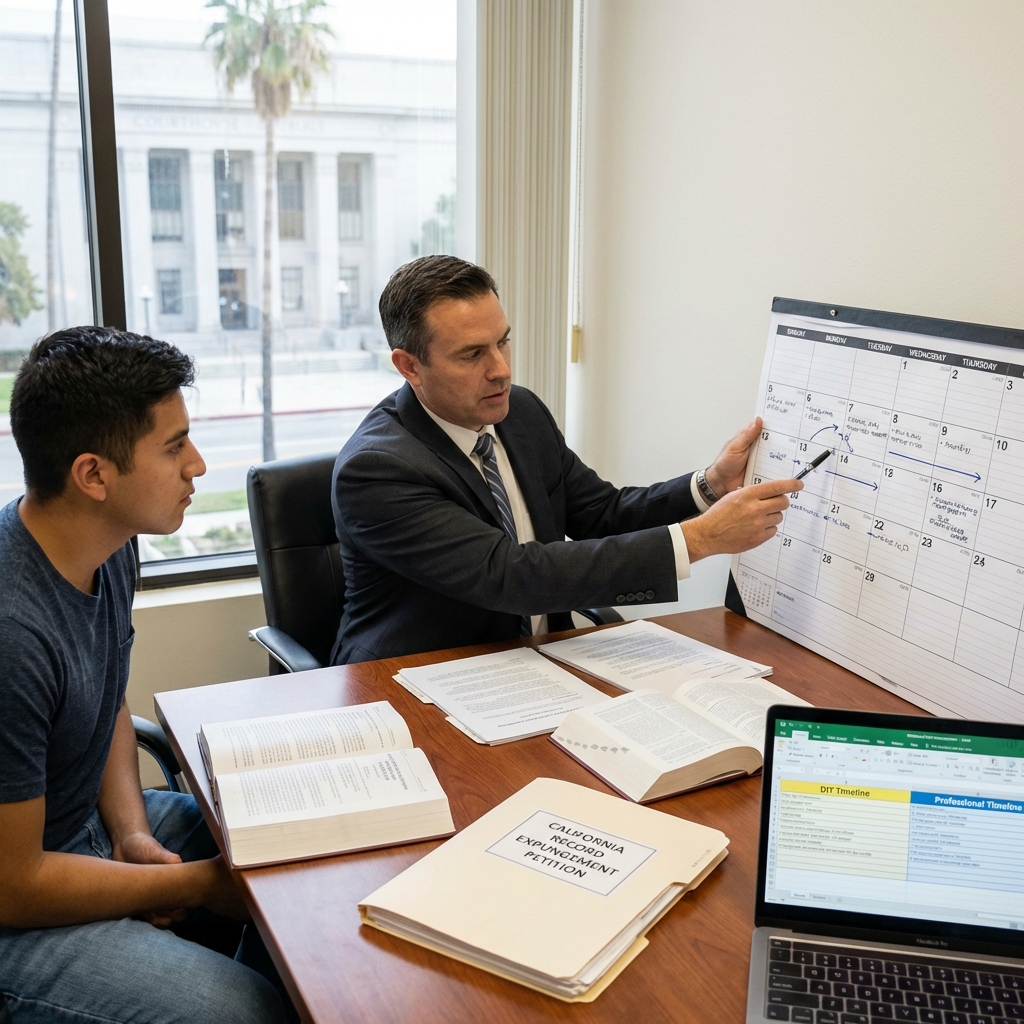
The Law Offices of Victor Orsatti Difference: Results in Months, Not Years
Illustration 3
We’ve been defending criminal cases across Southern California for years, serving San Diego County and surrounding regions. Expungement isn’t a side practice for us. It’s core to what we do because we believe people deserve the chance to move forward after paying their debt to society.
That experience means we’ve handled virtually every variation of California expungement law. We know how different judges interpret rehabilitation evidence. We understand what prosecutors in different counties will contest versus what they’ll concede. We’ve navigated system changes and evolved legal standards.
We’ve also built relationships with court staff and prosecutors that smooth the process. When a court clerk has questions about our filing, they call us directly rather than rejecting the petition. When a prosecutor is considering objection, they have a conversation with us about feasibility rather than filing boilerplate opposition.
Our flexible payment plans mean you’re not choosing between getting legal help and paying rent. Our affordable flat-fee pricing is transparent and fair. We’re accessible to the people who need expungement most: people rebuilding their lives.
What separates us is that we measure our success in changed circumstances, not just legal victories. We count success when a client gets a job they were previously denied. When they get approved for housing. When they can answer “no” to that background check question.
What to do next: Compare our timeline and approach to any other option you’re considering. We’re confident the difference will be clear.
Your Path Forward: Why You Need Expert Guidance Now
Your criminal record isn’t just a legal document. It’s an invisible barrier to employment, housing, professional licenses, and peace of mind. Every month it stays on file is another month of limitations you don’t need to accept.
The DIY path feels cheaper initially. But the real cost is months of delay, rejection cycles, emotional stress, and lost opportunities. We’ve seen clients lose job offers, housing applications, and professional advancement because they delayed proper legal action.
The choice isn’t between expungement and no action. That choice was made when your sentence was completed. The real choice is between doing this right once with professional guidance or spending months trying it alone, then hiring us anyway after rejections.
We’re here to move your case forward. Our 24/7 availability means you can start whenever you’re ready. Our free consultation means you have nothing to lose by exploring your options. Our flat-fee pricing means you know exactly what this costs upfront.
Contact us today. Let’s determine your realistic timeline, clarify your eligibility, and map out the exact steps to clear your record. You don’t have to navigate this alone, and you shouldn’t. The cost of waiting is too high.
Frequently Asked Questions (FAQ)
How long does record expungement typically take with professional representation?
We usually complete the expungement process within 2-4 months from your initial consultation, compared to 6-12+ months when attempting it yourself. Our filing accuracy and courtroom experience eliminate the common delays that DIY petitioners face, such as incomplete documentation or procedural errors that require resubmission. We also handle all interactions with the court and district attorney’s office, so you’re not managing timelines alone.
What mistakes do most people make when trying to expunge their record without a lawyer?
The most frequent errors we see are incomplete petitions, incorrect fee payments, and missing documentation specific to your case type and county. Many people file in the wrong court or at the wrong stage of their sentence completion, which restarts the entire timeline. We’ve built our process around these pitfalls, which is why our clients avoid the 3-6 month delays that typically come from having to refile or amend their petitions.
Can we handle expungement cases across all Southern California counties?
Yes, we represent clients throughout San Diego, Orange, Riverside, San Bernardino, and Imperial counties. Each county has slightly different processing procedures and court requirements, and we know exactly what each jurisdiction needs to approve your petition quickly. Our 24/7 availability means we can answer your county-specific questions anytime.