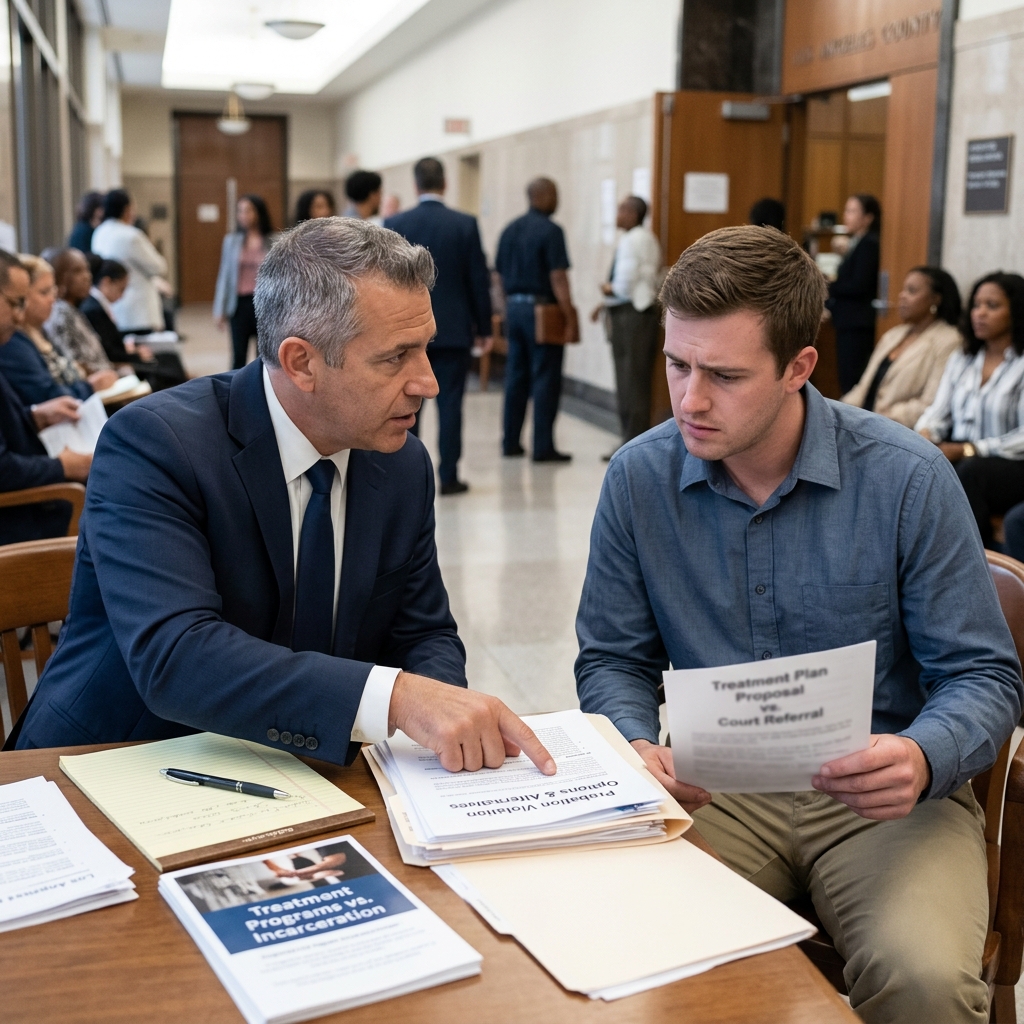
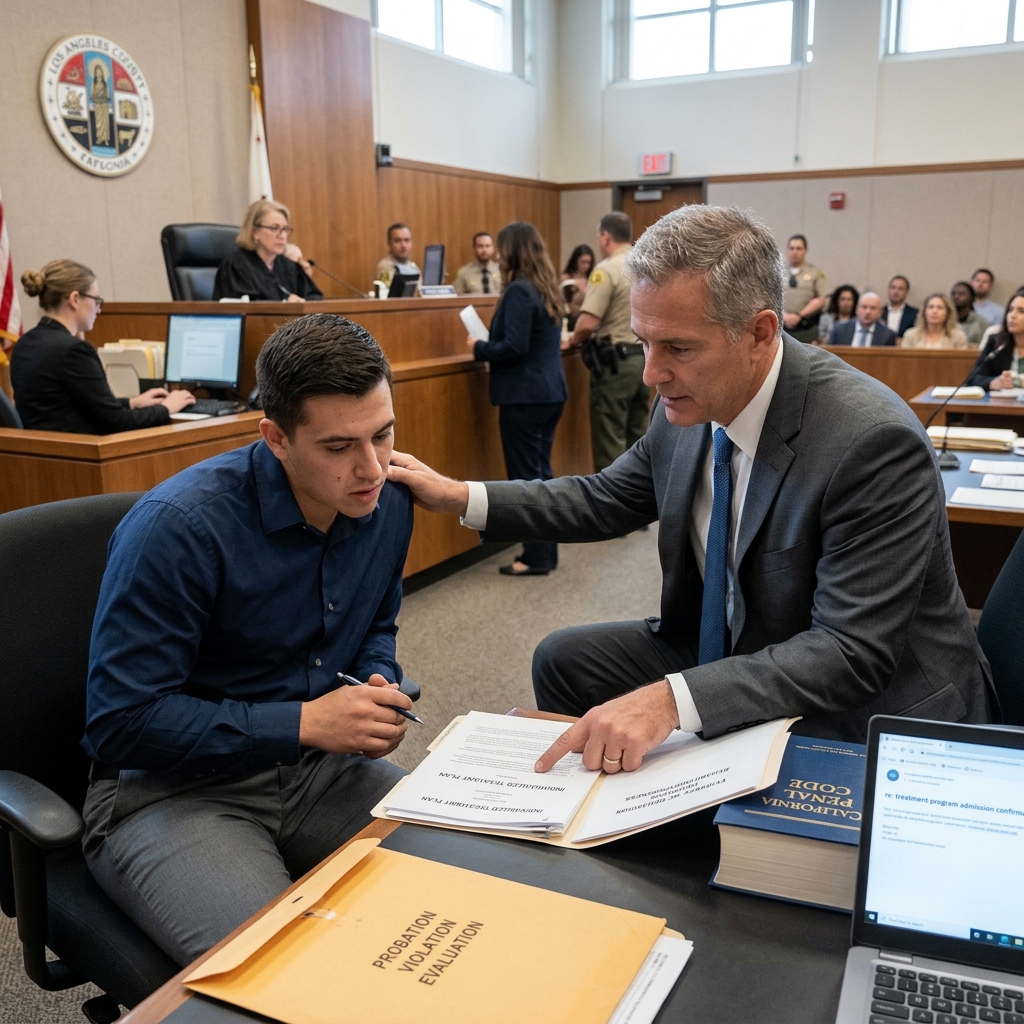
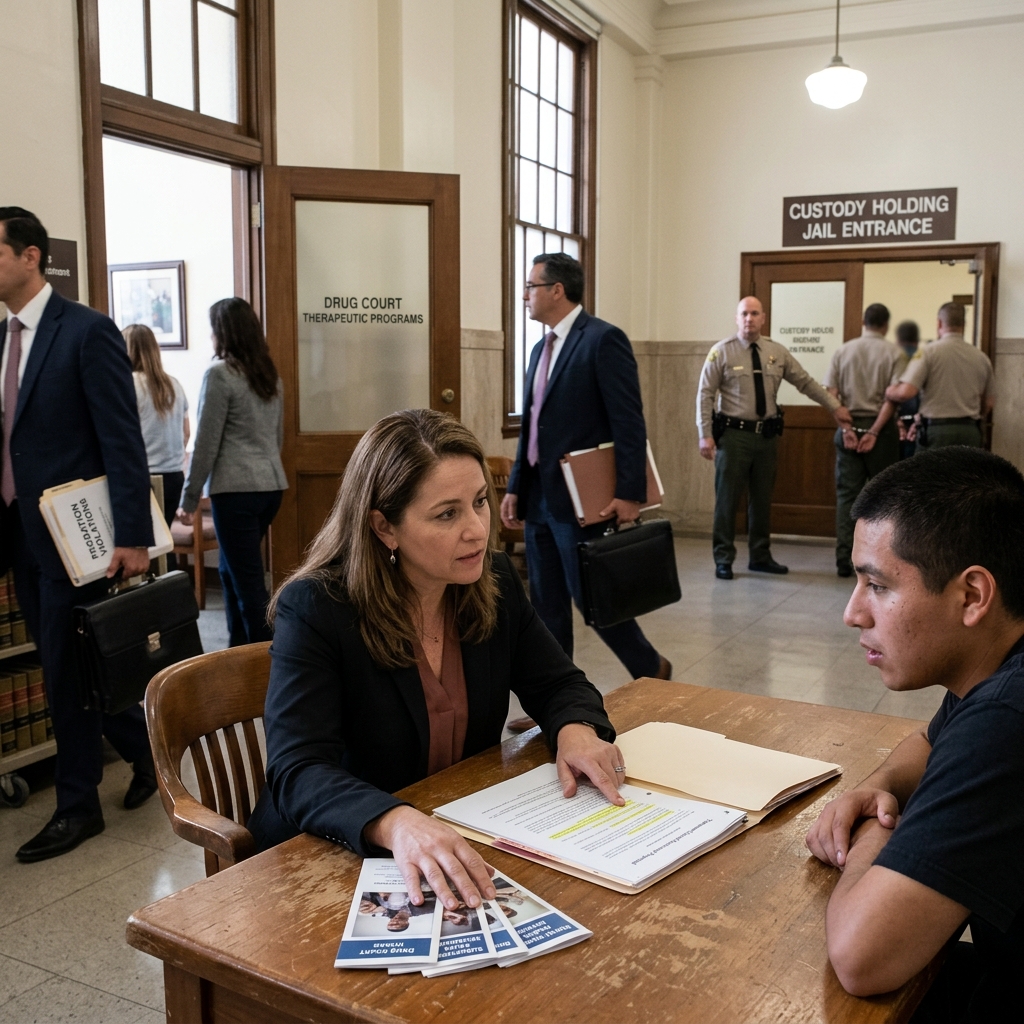
When you’re facing a probation violation charge in Los Angeles County, the stakes feel immediate and overwhelming. A judge could sentence you to jail, revoke your probation entirely, or offer you a path forward through a treatment program. That choice makes an enormous difference in your life trajectory. We’ve spent years helping clients navigate these critical moments, and we’ve learned that the alternative to incarceration often exists—but only if you know how to find it and present it effectively.
A probation violation occurs when you breach one or more conditions of your original probation sentence. This might mean missing a court date, failing a drug test, associating with a known gang member, or not completing mandated counseling. The consequences vary dramatically based on the violation’s severity, your criminal history, and how your case is presented to the court.
Your options typically fall into three categories: jail time (which can range from a few days to several years), modified probation with stricter conditions, or referral to a treatment program designed to address the underlying issue. Many defendants assume jail is inevitable, but that assumption costs them opportunities. A skilled criminal defense attorney can shift that narrative by demonstrating to the court why treatment serves both your rehabilitation and public safety better than incarceration.
The judge retains discretion in probation violation cases, especially if you present a compelling, well-documented case for alternatives. This is where strategic preparation becomes your biggest advantage.
Why Treatment Programs Offer Superior Outcomes to Incarceration
Research consistently shows that treatment-based interventions produce lower recidivism rates than jail sentences for probation violations. When someone spends time in custody, they return to the community without addressing the behaviors that led to the violation. Treatment programs, conversely, target the root causes.
If your violation stemmed from substance abuse, a court-ordered rehabilitation program gives you structure, counseling, peer support, and medical intervention. If mental health issues triggered the violation, a therapeutic program provides diagnosis and ongoing management. Jail addresses none of these factors. You leave just as unprepared as when you entered, only now with lost employment, damaged relationships, and a deeper criminal record.
Judges in Los Angeles County increasingly recognize this reality. They’re more receptive than ever to treatment proposals that demonstrate genuine commitment to change. Our role is ensuring your proposal is thorough, credible, and aligned with the specific conditions that generated your violation.
Key Criteria for Evaluating Treatment vs Jail Solutions
Not every treatment program fits every probation violation. Courts evaluate programs based on several factors:
Relevance to the violation: A drug court program makes sense for failed drug tests. A mental health diversion program fits emotional disturbance violations.
Program accreditation and structure: Courts prefer established, evidence-based programs with documented success rates and professional oversight.
Duration and intensity: Misdemeanor violations typically warrant shorter-term programs (30-90 days), while felony violations may require 6-12 months of intensive treatment.
Monitoring mechanisms: Regular check-ins, drug testing (if applicable), and progress reporting reassure the court of accountability.
Your compliance history: If you’ve violated probation before, the court needs confidence that this program will succeed where previous conditions failed.
When evaluating options, verify whether the program accepts court-referred clients, whether your county covers costs, and whether employment or education can continue during enrollment. A program that conflicts with your job schedule sets you up to fail.
Drug Court and Therapeutic Programs in Los Angeles
Los Angeles County operates several drug courts specifically designed for probation violations related to substance abuse. These programs combine court supervision, mandatory counseling, drug testing, and community support over 12-18 months. Successful completion often results in charge dismissal or reduced sentencing.
The beauty of drug court is the built-in incentive structure. You earn rewards for compliance (reduced court appearances, reduced drug testing) and face sanctions for violations (increased testing, brief jail holds as a wake-up call rather than full sentencing). The judge becomes a collaborator in your recovery rather than just an authority imposing punishment.
Beyond drug court, therapeutic communities within probation departments offer structured residential or outpatient treatment. These programs work well for violations involving criminal thinking patterns, impulse control, or co-occurring substance and mental health issues. Los Angeles also has specialized veteran treatment courts and homeless diversion programs for defendants with those specific circumstances.
We evaluate every available program to find the best match for your situation and then present it to the court with documentation of your enrollment, your plan for daily management, and how treatment directly addresses your violation.
Mental Health and Substance Abuse Rehabilitation Services
Mental health crises frequently trigger probation violations. A defendant might miss a court appearance due to a manic episode or commit a new offense while in the throes of untreated depression or schizophrenia. Jail doesn’t treat these conditions; it worsens them.
Los Angeles County provides mental health diversion programs that pair court-ordered psychiatric evaluation with ongoing treatment, medication management if needed, and case management. These programs operate through both county departments and private contractors. The best ones integrate housing support and employment assistance, recognizing that stability in living situation and employment prevents future violations.
Substance abuse specifically qualifies for Prop 36 programs and newer pretrial diversion statutes that prioritize treatment over incarceration. Inpatient rehabilitation (typically 28-90 days) provides medical detoxification and intensive therapy. Outpatient programs work for individuals with stable housing and existing support systems. Recovery housing offers peer support and structured accountability for those lacking stable homes.
We identify which service combinations actually address your specific profile, ensuring recommendations aren’t generic but precisely tailored.
How We Advocate for Treatment-Based Sentencing
Our approach begins before any probation violation hearing. We conduct a comprehensive assessment of the violation’s circumstances, your personal history, your motivation for change, and available resources. This becomes the foundation of a treatment proposal that positions you as serious about rehabilitation.
During the hearing, we present three elements: acknowledgment of responsibility, a detailed treatment plan with provider confirmation, and a realistic assessment of how treatment prevents future violations. We bring letters of support from family, employers, or community members. We document any previous treatment successes. We address the judge’s likely concerns head-on, demonstrating that our proposal isn’t wishful thinking but a concrete, monitored path forward.
The difference between a defendant who simply asks for a chance and one represented by counsel who presents a strategic case is profound. Courts see the latter as someone genuinely committed to change. That distinction often means the difference between jail and treatment.
Comparing Long-Term Consequences: Treatment Success vs Jail Time
Spending 90 days in county jail for a probation violation carries consequences that extend far beyond your release date. You lose your job or fall behind in school. Your housing situation destabilizes. Employers and landlords see jail time on background checks. The violation itself remains on your record, damaging future employment, professional licensing, and housing applications.
Treatment programs, by contrast, look like responsibility to employers. Completing a rehab program demonstrates commitment. It becomes part of a narrative of change rather than punishment. If you later seek to expunge the underlying case, successful completion of court-ordered treatment significantly strengthens that request.
Additionally, jail time often leads to additional violations upon release. Without treatment, the behaviors that caused the first violation persist. You’re statistically more likely to violate again, creating a cycle. Treatment interrupts that cycle by addressing root causes.
The financial impact also differs. Jail creates no income, costs court fees, and disrupts stability. Many treatment programs operate at no cost or low cost to defendants, and you can often work or study while participating.
Building Your Defense Strategy Around Treatment Eligibility
Not every defendant qualifies for every program, and not every violation warrants the same response. Our strategy starts by identifying which programs you actually qualify for based on the violation type, your background, and program eligibility criteria.
For substance-related violations, we investigate whether you have housing and employment stability (critical for outpatient programs) or need residential treatment. For mental health violations, we secure psychiatric evaluation to establish a clinical basis for diversion. For violations involving criminal thinking patterns, we present evidence-based cognitive behavioral therapy programs.
We also assess whether your case is strong enough to challenge the violation itself. Some violations are based on weak evidence or technical violations of conditions that shouldn’t have been imposed. Challenging the violation itself sometimes succeeds when pursuing treatment doesn’t. Our strategy weighs both paths.
The goal is presenting the court with a proposal so specific, so well-researched, and so directly responsive to your situation that denial becomes difficult to justify.
Getting Your Record Expunged After Program Completion
Successfully completing a treatment program creates an excellent foundation for record expungement. Once you finish the program, you’ve demonstrated rehabilitation. The court sees concrete evidence of change.
California law allows expungement of probation violations if you’ve completed court-ordered treatment successfully and complied with all remaining probation conditions. The expungement process involves petitioning the court to dismiss the violation, then pursuing dismissal of the underlying case if possible.
We handle this as a standard part of long-term case management. We track your treatment completion, document your progress, and file expungement petitions at the appropriate time. Getting your record clear gives you fresh employment and housing prospects without the shadow of the violation or conviction.
Why Our Firm Secures Treatment Alternatives Other Attorneys Cannot
The difference comes down to specificity and relationships. We know which Los Angeles County judges are most receptive to treatment-based sentences. We understand each program’s exact enrollment requirements, timelines, and success metrics. We’ve built relationships with treatment providers who give us priority enrollment for our clients, sometimes shortening waiting periods significantly.
When we present a treatment proposal, it isn’t generic. We’ve already secured tentative enrollment. We’ve confirmed costs and compatibility with your employment. We’ve researched the program’s outcomes specifically for violations like yours. We present the judge not with a wish but with a concrete path forward that you’re already prepared to walk.
This level of preparation changes outcomes. Clients we represent secure treatment options that unrepresented defendants miss entirely. Our 24/7 availability means we can respond immediately when probation violations occur, getting you into our process before critical court deadlines pass.
Making the Right Choice for Your Future
Your probation violation doesn’t have to mean jail. It can mean a turning point where you address the underlying issues that generated the violation in the first place. Treatment programs offer that opportunity, but securing placement requires strategic legal advocacy from someone who understands the system deeply.
We’ve helped hundreds of Southern California defendants transform probation violations into opportunities for genuine rehabilitation. We know which programs work, how to present them compellingly, and how to use successful completion to eventually clear your record. If you’re facing a probation violation in San Diego County, San Bernardino County, Orange County, Riverside County, or Imperial County, contact us for a free 24/7 consultation. The choice you make now determines your trajectory for years ahead.
Frequently Asked Questions (FAQ)
What treatment programs qualify as alternatives to jail for probation violations in Los Angeles?
We work with drug courts, mental health diversion programs, and rehabilitation facilities throughout Los Angeles County that judges recognize as legitimate alternatives to incarceration. Our experience shows that programs addressing substance abuse, anger management, or mental health conditions have the strongest track records for convincing courts to suspend jail time. We evaluate your specific violation and criminal history to identify which programs will strengthen your sentencing position.
How can we help secure a treatment-based sentence instead of jail time?
We build a comprehensive defense strategy that demonstrates your eligibility and commitment to rehabilitation before your sentencing hearing. Our team presents evidence of your program enrollment, personal circumstances, and compliance potential to persuade the judge that treatment serves justice better than incarceration. We also manage all communication with treatment facilities and prosecutors to ensure your case presents the strongest possible argument for alternatives to jail.
Will completing a treatment program help me get my record expunged after a probation violation?
Yes, successful program completion significantly strengthens your eligibility for expungement under California law. We help you document your rehabilitation progress and use it as evidence when we file your expungement petition. After you finish probation and demonstrate sustained compliance, we can move forward with clearing your record so this violation no longer impacts your employment or housing opportunities.