

Table of Contents
- 1. Understand Juvenile Record Expungement Eligibility Requirements
- 2. Meet the Age and Waiting Period Criteria
- 3. Petition the Court for Record Dismissal and Sealing
- 4. Navigate the Formal Expungement Hearing Process
- 5. Address Probation Violation or Restitution Issues
- 6. Secure Your Expungement Order and Seal Records
- 7. Protect Your Rights After Expungement is Granted
1. Understand Juvenile Record Expungement Eligibility Requirements
A juvenile record can follow you into adulthood, affecting employment, housing, and educational opportunities even after you’ve moved past youthful mistakes. In Imperial County, California law provides a pathway to clear these records through expungement, but the process requires understanding specific eligibility rules and court procedures. We’ve guided countless young adults through this journey, and we know that taking action early—with proper legal guidance—makes all the difference.
Expungement isn’t automatic, and it’s not a simple form you mail in. It demands strategic petitioning, accurate documentation, and often a court hearing where your case is presented. The stakes are high because a successful expungement can restore your ability to truthfully say you were never arrested or convicted in most employment and housing contexts.
Not every juvenile case qualifies for expungement. California distinguishes between cases where charges were dismissed and cases where a minor was adjudicated (found guilty). Understanding which category your case falls into determines whether you can petition now or must wait.
Cases eligible for immediate expungement typically include those where:
- Charges were dismissed under Penal Code Section 581 or 583
- The prosecution declined to file charges after arrest
- A dismissal occurred as part of a diversion program
- The minor was acquitted at trial
Cases where the minor was adjudicated (found guilty) require meeting age and waiting period requirements before filing. This is where many people become confused, thinking they can expunge immediately when a waiting period is mandatory.
We evaluate your specific circumstances during a free consultation because the distinction between dismissal and adjudication fundamentally changes your timeline. Some records can be sealed within weeks; others require waiting until you reach a certain age. Getting this assessment correct upfront prevents wasted filing fees and court delays.
Action step: Gather your case disposition documents and determine whether your case ended in dismissal or adjudication before moving forward.
2. Meet the Age and Waiting Period Criteria
California law has modernized juvenile expungement timelines, especially under recent statutory changes, but waiting periods still apply in many cases. If you were adjudicated (found guilty) as a minor, you generally must meet one of these criteria:
- You’ve reached age 18 and at least one year has passed since case closure
- You’ve completed probation and satisfied restitution (regardless of age)
- Special circumstances allow earlier relief under Penal Code Section 707.5 for cases involving serious offenses
The waiting period structure recognizes rehabilitation potential while also protecting public safety. Most people can petition once they turn 18 and one year has passed, but if probation continues past age 18, that probation must be completed first.
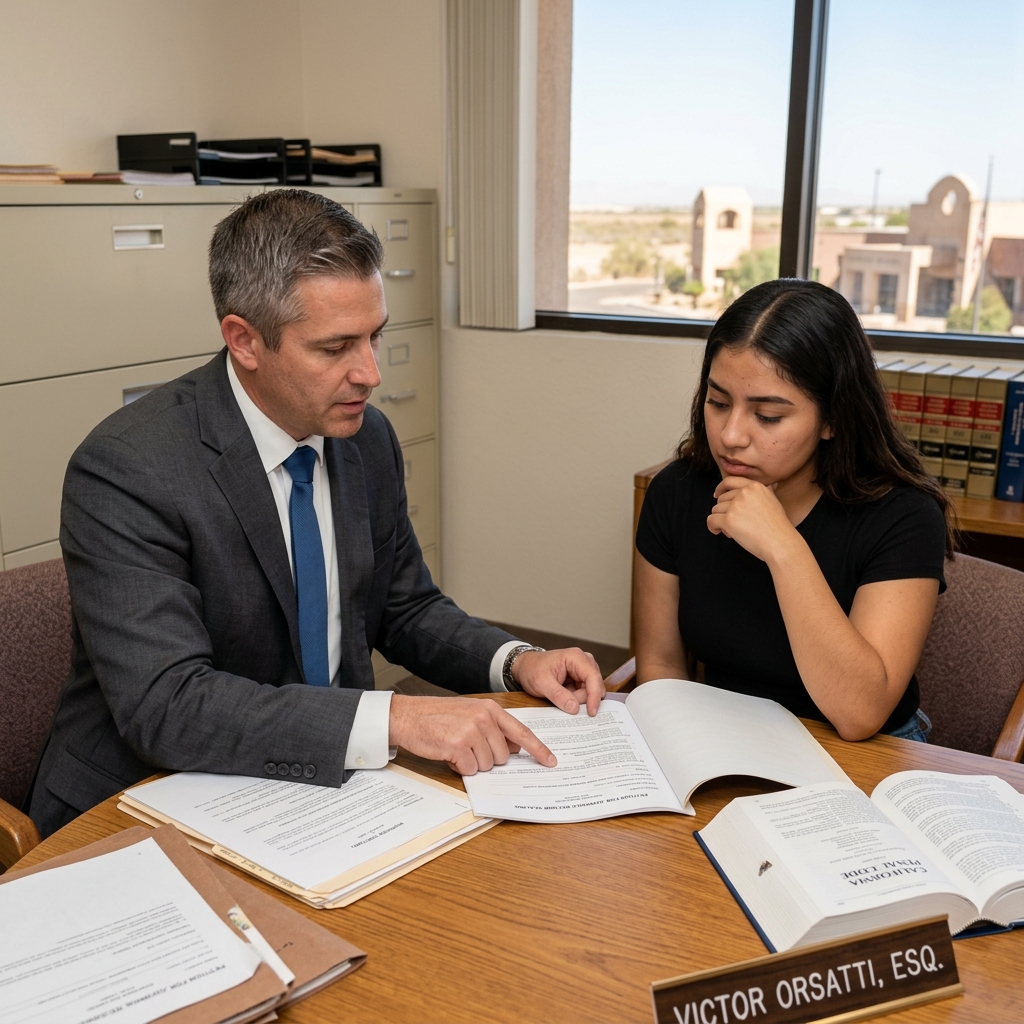
Imperial County courts apply these waiting period rules consistently, though procedural timing varies by courtroom. We’ve found that many young adults don’t realize they’re now eligible to file because they stopped thinking about their case years ago. A strategic review of your probation status and case completion date reveals whether you can move forward immediately.
Action step: Contact Imperial County Superior Court or your public defender’s office to confirm your probation discharge date and case closure date.
3. Petition the Court for Record Dismissal and Sealing
The formal expungement process begins with filing a petition under Penal Code Section 782 (for cases involving adjudication) or the appropriate dismissal statute (for cases where charges were dismissed). The petition is a legal document that explains why the court should grant expungement and addresses the statutory criteria.
Your petition must include:
- Complete case information (case number, court, charges)
- Your current name and identifying information
- Documentation of eligibility (age, waiting period satisfaction, probation discharge)
- Argument explaining rehabilitation and why sealing serves interests of justice
- Declaration under penalty of perjury from you (and sometimes probation officers or employers)
This isn’t a casual letter to the judge. Courts require specific legal formatting, proper case citations, and compelling factual support. A weak petition can be denied even if you’re technically eligible, forcing you to refile months later and pay additional fees.
We prepare petitions that speak directly to what Imperial County judges consider: your post-conviction conduct, employment stability, education progress, and community ties. We frame your rehabilitation story in legal language that connects to statutory criteria rather than simply hoping the judge feels sympathetic.
Action step: Compile all documentation proving your eligibility (probation discharge papers, employment verification, educational achievements) before drafting your petition.
4. Navigate the Formal Expungement Hearing Process
Most expungement petitions in Imperial County result in hearings where the prosecution and judge examine your request. Understanding the hearing format and what to expect removes unnecessary anxiety and helps you prepare effectively.
The typical hearing follows this structure:
- You or your attorney presents the petition and supporting evidence
- The prosecution may stipulate (agree) or contest the expungement
- The judge asks questions about your post-conviction record and rehabilitation
- The judge makes a ruling immediately or takes the matter under submission

When we represent clients, we often negotiate with the district attorney’s office before the hearing. Many prosecutors will stipulate to expungement if your post-conviction conduct is clean and your case facts don’t involve victim impact concerns. A stipulation typically results in immediate judicial approval without needing a contested hearing.
If the prosecution contests expungement, we’re prepared to present evidence, call witnesses (such as employers or counselors), and respond to arguments about public safety. The judge has discretion to grant or deny expungement, so persuasive presentation matters significantly.
Action step: Request a pre-hearing conference with the district attorney’s office to explore whether stipulation is possible.
5. Address Probation Violation or Restitution Issues
If you have outstanding probation violations or unpaid restitution, the court may delay or deny your expungement petition. These issues must be resolved before filing, or they’ll become leverage the prosecution uses to argue against your petition.
Restitution is payment owed to crime victims. If your case involved monetary restitution and you haven’t paid in full, you face a choice: pay the outstanding amount before expungement, or argue that financial hardship makes full payment impossible. Courts rarely expunge when restitution remains unpaid without compelling justification.
Probation violations are separate charges or breaches of probation terms. If you’re currently on probation and have violations pending or recent, expungement is unlikely. However, if violations occurred years ago and were resolved, they’re typically not disqualifying.
We review your probation and restitution status carefully during initial consultation. Sometimes we negotiate payment plans with the district attorney to satisfy restitution requirements before expungement. Other times, we file declarations explaining financial hardship that justify relief despite unpaid restitution, though this requires strong supporting facts.
Action step: Contact your probation officer or the court to confirm whether probation is complete and restitution is satisfied, or identify outstanding amounts.
6. Secure Your Expungement Order and Seal Records
Once the judge grants your expungement petition, you receive an order signed by the judge. This order directs the court clerk to seal your juvenile records and instruct law enforcement, the district attorney, and probation to mark records as sealed.
The practical steps following judicial approval include:
- Court clerk processes the order and seals physical and electronic case files
- District attorney’s office is notified and must seal their records
- Law enforcement agencies (Imperial County Sheriff, local police) seal arrest records
- Probation department removes your case from accessible databases
- A certified copy of the expungement order is provided to you for future reference
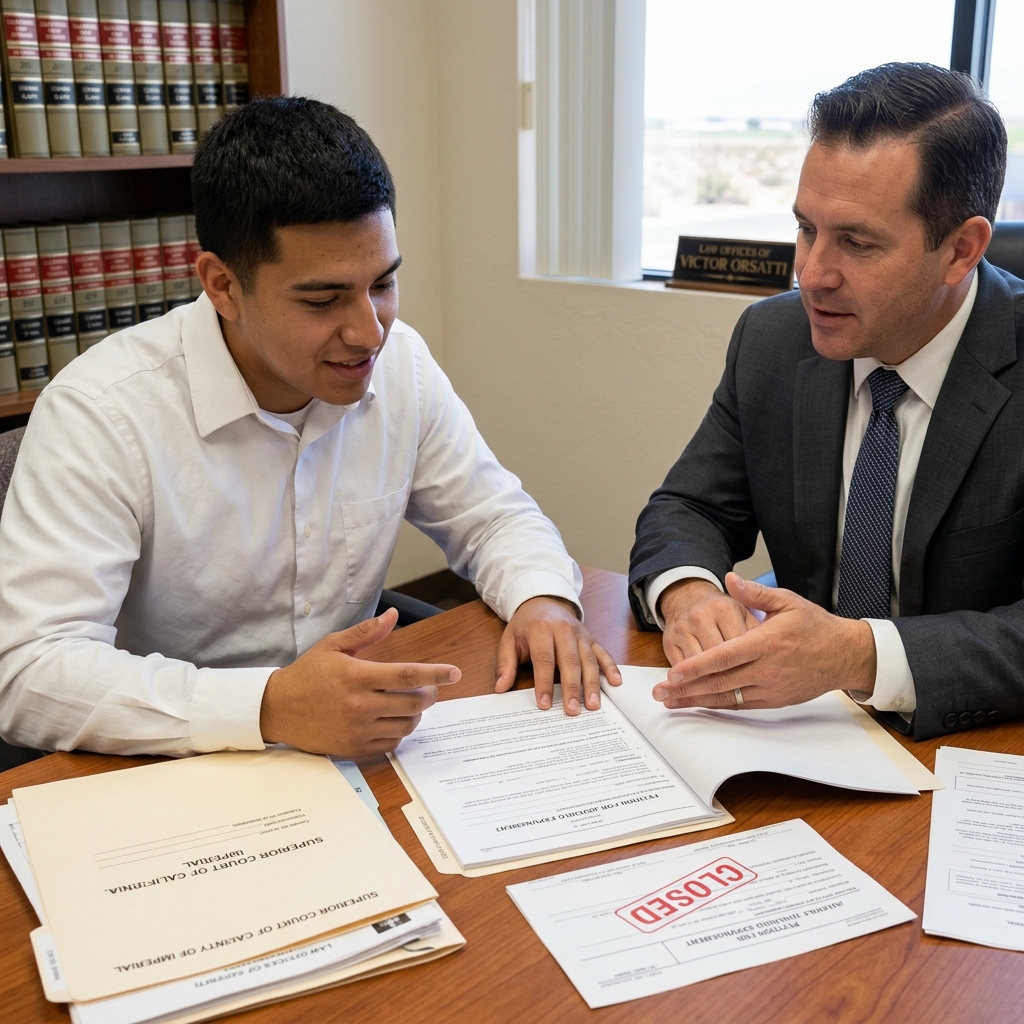
Sealing doesn’t delete records entirely; it removes them from public access. Government agencies retain sealed records for limited purposes (background checks for certain sensitive positions), but the vast majority of private employers, landlords, and educational institutions have no legal access to sealed juvenile records.
We ensure the sealing process is complete by following up with all relevant agencies. We’ve discovered instances where one agency failed to process the sealing order, leaving your record visible in their system. A comprehensive follow-up prevents these gaps.
Action step: Request certified copies of the expungement order and keep them in a secure location for future reference if employers or housing providers ask about your record.
7. Protect Your Rights After Expungement is Granted
Once your record is sealed, you have significant legal protection. You can truthfully answer “no” when asked whether you’ve been arrested or convicted in most contexts. However, important exceptions exist that you must understand to avoid creating new legal problems.
You must still disclose sealed juvenile convictions when:
- Applying for professional licenses (law, medicine, nursing)
- Seeking peace officer or law enforcement positions
- Applying for jobs with government agencies
- Responding to questions from law enforcement during investigations
- Court proceedings where your prior conduct is relevant
Failing to disclose when required can result in criminal charges for perjury or fraud, defeating the purpose of expungement. Understanding these exceptions protects you from innocent mistakes with serious consequences.
Beyond disclosure requirements, expungement restores various civil rights. You’re eligible to possess firearms if no other disqualifications apply. You can serve on juries. You can apply for educational programs without juvenile record stigma. These restoration opportunities represent genuine fresh starts if you understand and exercise them properly.
We counsel our clients on what expungement does and doesn’t accomplish. It’s powerful, but it’s not invisibility. It’s the legal equivalent of removing the official record while preserving your own honesty and accountability about your past.
Action step: Keep your expungement order and understand the mandatory disclosure exceptions that still apply to your situation.
—
Expunging your juvenile record in Imperial County is achievable when you understand eligibility requirements, meet waiting periods, and properly petition the court. The process involves strategic timing, thorough documentation, and often negotiation with prosecutors.
At the Law Offices of Victor Orsatti, we’ve successfully guided young adults through expungement in Imperial County and throughout Southern California. We offer free consultations to assess your eligibility, prepare compelling petitions, negotiate with prosecutors, and represent you at hearings if needed. Our flat-fee pricing and flexible payment plans make professional representation accessible when you need it most. Whether you’re recently eligible or have been waiting for the right moment, contact us today at our San Diego office or reach out through our website for a confidential consultation. Your clean slate is within reach with proper legal guidance.
Leave a Reply
You must be logged in to post a comment.