
Modifying Probation Conditions in Imperial County After Violation
24
Apr
Modifying Probation Conditions in Imperial County After Violation
Table of Contents
- Why Probation Violations Create Immediate Legal Consequences
- Understanding Your Rights to Request Condition Modifications
- How Prosecutors React to Modification Requests in Imperial County
- The Strategic Process We Use to Successfully Challenge Restrictions
- Evidence and Arguments That Persuade Judges to Reduce Conditions
- Working With the Probation Department to Build Your Case
- Timing Your Modification Request for Maximum Likelihood of Success
- Avoiding Common Mistakes That Result in Denied Applications
- Our Track Record Getting Conditions Reduced Across Southern California
- Next Steps: Securing Your Free Consultation With Our Team
Why Probation Violations Create Immediate Legal Consequences
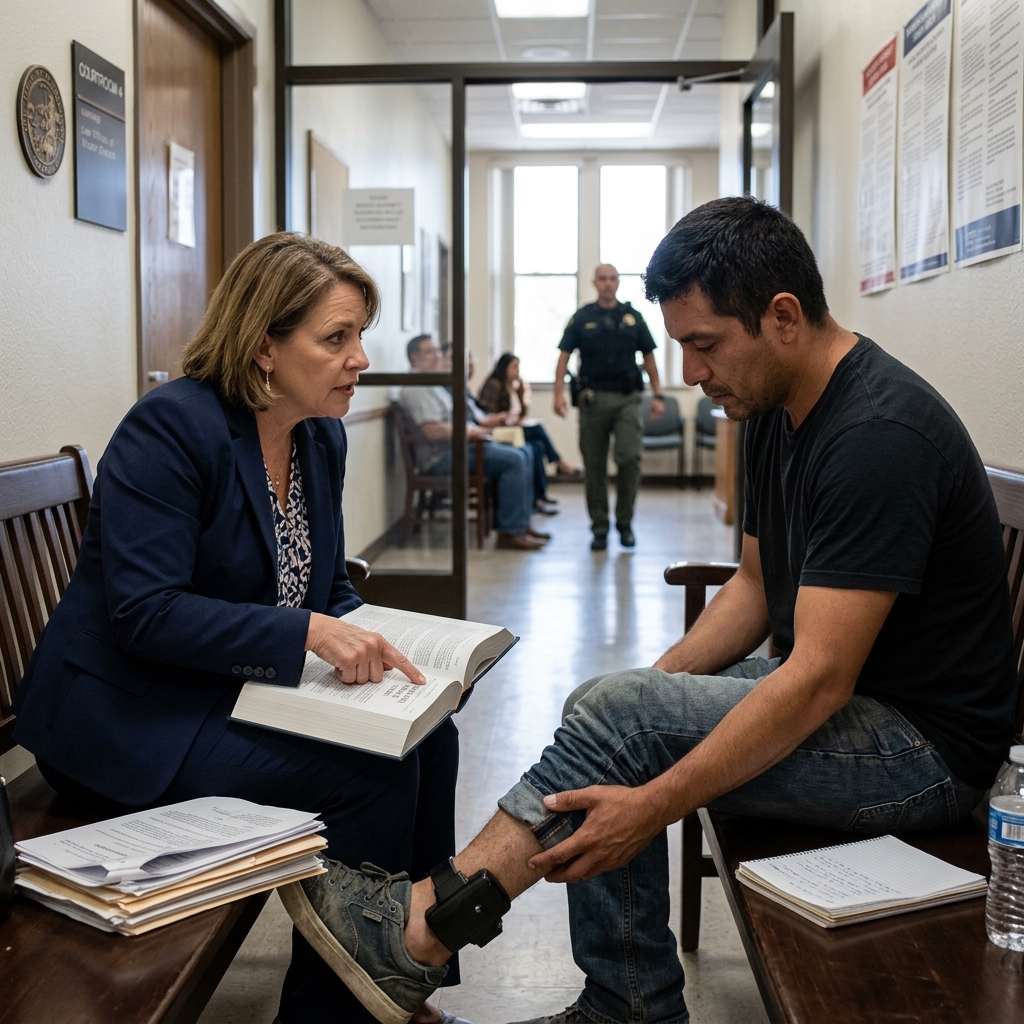
When you’re placed on probation, the conditions attached to that sentence feel permanent. Many people assume they’re stuck with restrictions like electronic monitoring, drug testing, curfews, or travel limitations for the entire probation period. That’s not necessarily true. If you’ve violated probation in Imperial County or face conditions that are genuinely preventing you from rebuilding your life, you have the legal right to request modification.
We’ve helped clients across Southern California reduce or eliminate probation conditions even after violations occurred. The key is understanding how Imperial County judges approach these requests and building a strategic case before you walk into the courtroom.
A probation violation puts you in a precarious position. Unlike the original sentencing where the prosecution had to prove guilt beyond a reasonable doubt, violation hearings use a much lower standard: preponderance of the evidence (more likely than not). That shift in burden makes the stakes feel higher, and in many cases, they are.
When the court finds a violation has occurred, a judge can:
- Extend your probation period
- Add stricter conditions (longer curfew, more frequent reporting)
- Impose jail time as a sanction
- Revoke probation entirely and send you to prison
The immediate consequence is usually increased restrictions. Many clients tell us they never expected the court to impose electronic monitoring or alcohol testing after their violation was established. This is where modification requests become critical. A violation doesn’t close the door on relief; it just changes how you need to approach it.
Your next step should be securing experienced representation immediately. The time between the violation being reported and your hearing is your window to prepare a compelling case for why less restrictive conditions would still protect public safety and allow you to comply with probation going forward.
Understanding Your Rights to Request Condition Modifications
California law gives you the right to petition the court for modification of probation conditions. This right exists under Penal Code Section 1203.3, which allows judges to change, add, or remove conditions of probation when doing so would serve the interests of justice.
The critical point: you don’t need the prosecution’s permission. You don’t need your probation officer’s approval. You need the judge to agree that modification is justified. That distinction matters because it means the outcome depends on how effectively you present your case, not on whether the district attorney wants to negotiate.
Your probation officer can petition for modifications too, usually to make conditions stricter. In Imperial County, we’ve seen officers request enhanced monitoring when they perceive compliance risks. Knowing this works both directions helps you anticipate the arguments you’ll face.
What gives you standing to request modification after a violation? Demonstrating changed circumstances, rehabilitation progress, or conditions that are unnecessarily restrictive relative to your offense and risk level. We focus on showing the judge that compliance is more likely under modified conditions than under the current restrictions.
How Prosecutors React to Modification Requests in Imperial County
The Imperial County District Attorney’s office doesn’t automatically oppose all modification requests, but they do approach them strategically. In our experience, they’re more receptive when the requested change doesn’t undermine the core purpose of probation supervision.
If you’re asking to remove electronic monitoring but you work full-time and have stable housing, prosecutors may not fight hard. If you’re asking to remove all drug testing after a methamphetamine conviction with recent violations, they’ll likely oppose vigorously.
Prosecutors in Imperial County typically want:
- Assurance that public safety isn’t compromised
- Evidence that the person requesting modification has demonstrated compliance in other areas
- A clear reason why the current condition isn’t serving its intended purpose
We’ve found that prosecutors respond better when you come to the table with specific evidence rather than a general complaint about conditions being too strict. “Your Honor, electronic monitoring costs $15 per day and prevents me from accepting overtime” is weaker than “Your Honor, electronic monitoring costs $15 per day, I’ve been compliant for 11 months, and my employment opportunity offers $40,000 annually in stable income.”
The prosecutor will still argue for keeping conditions in place, but you’re negotiating from a position where your request seems reasonable rather than self-serving.
The Strategic Process We Use to Successfully Challenge Restrictions
Our approach to modification requests follows a structured framework that accounts for Imperial County court expectations and prosecution strategy.
First, we conduct a full audit of your current conditions. Which ones are connected to your original offense? Which ones seem duplicative (two different drug tests, for instance)? Which ones are genuinely preventing lawful activity like work or education? This inventory tells us where judges are most likely to be persuaded.
Second, we gather evidence of rehabilitation. This isn’t about claiming you’re a changed person. It’s about documenting concrete progress: employment records, letters from your employer, housing stability, completion of counseling or treatment programs, family responsibilities, or community involvement. Imperial County judges want to see behavioral proof, not promises.
Third, we research the judge assigned to your case and review their past modification decisions. Different judges in Imperial County have different thresholds. Some are more permissive with employment-related modifications; others prioritize public safety language above all else. We tailor arguments accordingly.
Fourth, we prepare a written petition with case law supporting modification and a proposed modified probation order. Walking in with a draft order that your attorney and potentially the prosecutor have already reviewed significantly increases approval likelihood.
Fifth, we conduct a practice hearing internally to refine your testimony. You’ll likely testify about why the modification matters to you and why you can still comply under less restrictive conditions. That testimony needs to be credible, specific, and brief.
Evidence and Arguments That Persuade Judges to Reduce Conditions
Imperial County judges respond to evidence that directly addresses the original sentencing rationale. If your sentence emphasized rehabilitation, evidence of completed treatment carries weight. If it emphasized public protection, evidence of stable employment and community ties matters most.
We present evidence in this priority order:
Documentation over statements. Tax returns, employer letters, lease agreements, and program completion certificates beat verbal claims. A letter from your boss stating you’ve been reliable for eight months is far more persuasive than you saying you’ve been a good employee.
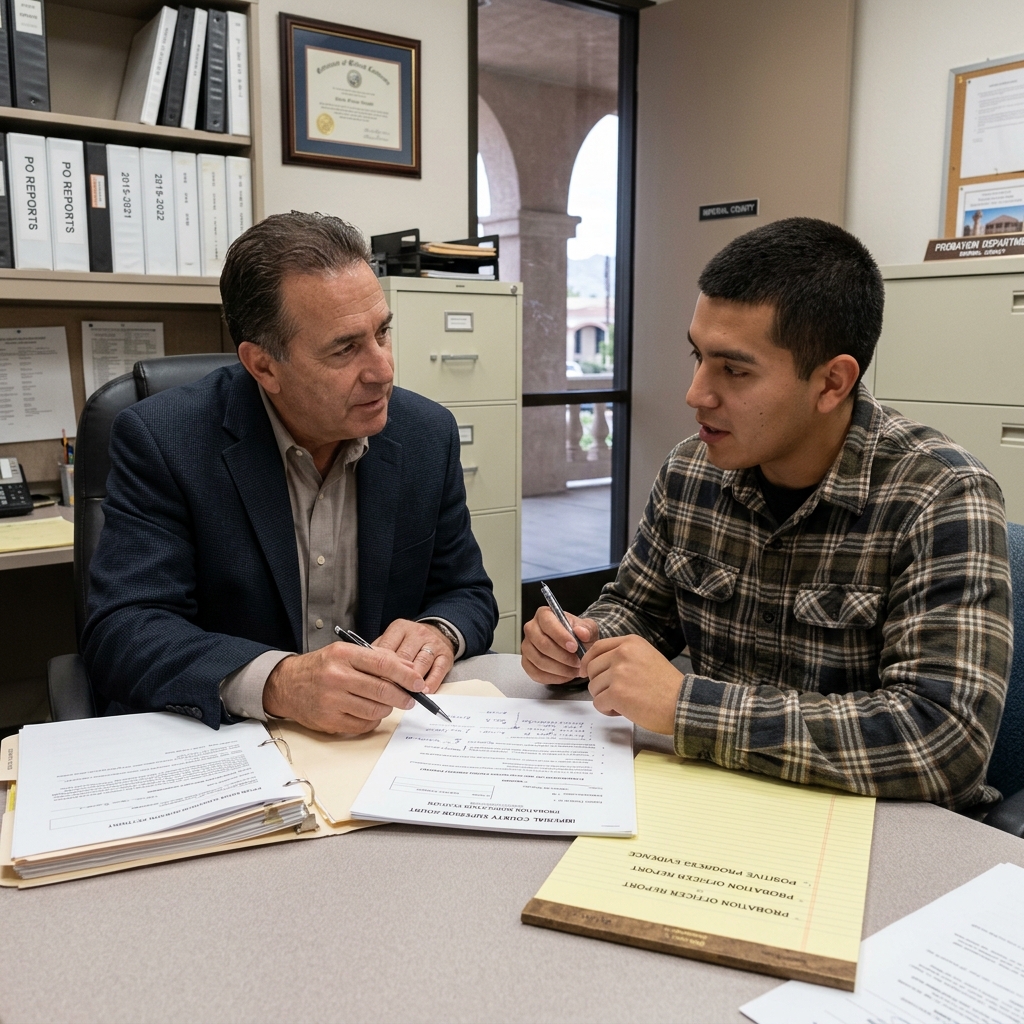
Behavioral consistency. If you’re asking to remove curfew restrictions, highlight months of compliance with your current curfew. If you’re requesting removal of substance testing, show consecutive clean test results over a meaningful period, not just a few months.
Specific impact of current conditions. Generic complaints don’t work. Show exactly how electronic monitoring prevents employment, or how frequent reporting prevents housing stability, or how a travel restriction blocks necessary medical care. Judges modify conditions when they see a clear mismatch between the restriction and its purpose.
Risk mitigation under modified conditions. Explain how you’ll comply under the new conditions. If you’re removing GPS monitoring but keeping check-in requirements, show that check-ins still provide supervision. We craft modification requests that remove unnecessary restrictions while maintaining accountability.
Arguments that typically succeed in Imperial County focus on proportionality and rehabilitation. “This condition no longer serves its intended purpose because of changed circumstances” is stronger than “This condition is unfair.” Judges respond to logic, not emotion, so we lead with evidence and let the judge draw conclusions.
Working With the Probation Department to Build Your Case
Your probation officer’s report can either support or undermine your modification request. They’ll be asked by the court whether modification is advisable, and their recommendation carries significant weight.
We recommend being transparent with your probation officer about your intention to request modification. That doesn’t mean asking permission; it means informing them and explaining your reasoning. Probation officers appreciate directness and notice when someone is trying to go behind their back.
In our experience, probation officers in Imperial County are more supportive of modifications when they see genuine effort to comply. If you’re checking in on time, reporting honestly about violations or challenges, and actively engaging with any required programs, your officer may become an advocate rather than an opponent.
We also prepare you for the probation officer’s concerns. They might worry about accountability or monitoring capacity. If you address these concerns in advance, you can reduce their resistance. For example, if you’re requesting removal of electronic monitoring but offering to increase check-in frequency, you’re showing the officer that compliance oversight continues.
Some officers will request their own modifications before you do, recognizing that adjusted conditions will improve compliance. Building a working relationship with your officer, even after a violation, positions you better than treating them as an adversary.
Timing Your Modification Request for Maximum Likelihood of Success
The timing of your modification petition can determine its success or failure. File too soon after a violation and judges see it as an attempt to escape consequences. File too late and they question why you’re only now raising the issue.
Generally, we wait until you’ve demonstrated consistent compliance after the violation for at least 60 to 90 days. That window shows you’re serious about reform without appearing to dodge accountability. Longer isn’t always better; if you wait six months, the judge may wonder why you didn’t request modification sooner.
Seasonal considerations matter in Imperial County. Heavy court calendars in certain months mean your hearing might be continued multiple times, dragging out the process. We typically file when court schedules are lighter and judges have time for thoughtful consideration.
Life circumstances also affect timing. If you’re facing job loss because of current conditions, that’s an urgent reason to file immediately. If you simply want relief without any pressing need, waiting until you’ve accumulated more evidence of rehabilitation is smarter.
We also consider whether any mandatory review periods are approaching. Some probation terms include automatic condition review dates. Requesting modification shortly before those reviews can consolidate hearings and simplify the process.

Avoiding Common Mistakes That Result in Denied Applications
We’ve seen modification requests denied because of preventable errors. These mistakes cost clients months of unnecessary restrictions.
Overstating your case. Claiming you’ve been perfectly compliant when you had a minor reporting violation undermines your credibility. Judges verify information, and dishonesty tanks your request. Own minor issues and show how you’ve corrected them.
Requesting too much at once. Asking to remove electronic monitoring, drug testing, curfew, and reporting in a single petition looks unreasonable. Request the most essential modification first. Subsequent requests are easier once you’ve proved compliance under the modified conditions.
Failing to propose alternatives. “Just remove the condition” is weaker than “Remove electronic monitoring but keep weekly check-ins.” Show that you’re thinking about what accountability looks like without the specific restriction.
Ignoring the prosecution’s likely arguments. If you committed a drug offense and are requesting removal of substance testing, anticipate that the prosecutor will highlight the connection. Address it head-on in your petition rather than hoping the judge doesn’t notice.
Testifying inconsistently with your written petition. Your testimony should reinforce your petition, not contradict it. We prepare you to tell a coherent story about why modification serves justice.
Missing filing deadlines or procedural requirements. Imperial County has specific rules about petition format, advance notice to the prosecution, and filing requirements. Missing any of these gets your request rejected before the judge even considers the merits.
Our Track Record Getting Conditions Reduced Across Southern California
Across San Diego County, San Bernardino County, Orange County, Riverside County, and Imperial County, we’ve successfully reduced or eliminated probation conditions for clients even after violations. These results come from systematic preparation and clear understanding of what judges in each county prioritize.
In Imperial County specifically, we’ve obtained removal of electronic monitoring when clients demonstrated stable employment, removal of substance testing after completion of treatment programs, and reduction of reporting requirements based on consistent compliance. We’ve also negotiated with prosecutors to agree to modifications before court hearings, which accelerates relief.
Our approach recognizes that modification cases are won on preparation, not persuasion. Judges want evidence, credibility, and a clear case that modification aligns with the interests of justice. When we present that case, courts respond.
Next Steps: Securing Your Free Consultation With Our Team
If you’re facing probation conditions in Imperial County that feel overly restrictive or you’ve recently violated probation and need representation, contact Law Offices of Victor Orsatti for a free 24/7 consultation. We serve Southern California defendants across Imperial County, San Diego County, San Bernardino County, Orange County, and Riverside County.
During your consultation, we’ll review your current conditions, assess modification viability, and explain the specific strategy we’d use in your case. We work on affordable flat-fee pricing and flexible payment plans because criminal defense shouldn’t depend on your ability to pay upfront.
Call us today. The sooner we start building your modification case, the sooner we can work toward relief.