
Table of Contents
- Why Probation Violations Threaten Your Freedom and Record
- What Constitutes a Violation: Technical vs. Substantive Breaches
- The Immediate Consequences You Face Without Expert Defense
- How We Defend Against False or Exaggerated Allegations
- Our Proven Strategy for Probation Violation Hearings
- Securing Probation Reinstatement Without Incarceration
- Record Protection: Minimizing Long-Term Damage to Your Future
- Our Track Record Defending Probation Cases Across Southern California
- Why Rapid Legal Action Matters in Your Situation
- Your 24/7 Access to Our Probation Defense Team
- Frequently Asked Questions (FAQ)
Why Probation Violations Threaten Your Freedom and Record
When you’re on probation, a single misstep can unravel your entire future. We’ve defended hundreds of clients facing probation violation charges across Southern California, and we know how quickly a hearing can spiral into incarceration without proper representation. The difference between walking out of court with your freedom intact and spending months in jail often comes down to one thing: having an experienced probation violation attorney who understands the specific vulnerabilities in the prosecution’s case.
Probation is a conditional sentence. You’ve been given a second chance to avoid prison time, but that chance comes with strict conditions. Break them, and the judge can revoke your probation entirely and impose the original sentence you were facing. Unlike a new criminal trial, the burden of proof in a violation hearing isn’t “beyond a reasonable doubt.” The standard is much lower: “preponderance of the evidence,” which means more likely than not.
This matters profoundly because it means the prosecution needs far less evidence to secure a conviction. We’ve seen clients incarcerated based on testimony alone, without corroborating documentation. Your freedom depends on someone proving you violated your conditions, and if we can create reasonable doubt about that allegation, we protect you from serving time you thought you’d already navigated around.
Beyond jail, a probation violation creates a permanent mark on your record. Even if you’re reinstated to probation, the court documentation becomes part of your criminal history, affecting employment background checks, housing applications, and professional licensing for years to come.
What Constitutes a Violation: Technical vs. Substantive Breaches
Not all violations are created equal, and understanding the distinction is critical to building your defense.
Technical violations are procedural breaches that don’t involve new criminal conduct. Missing a probation office appointment, failing a drug test despite abstaining from illegal use (perhaps medication interaction), or moving without permission fall here. These violations are often defensible because they don’t demonstrate criminal intent or danger to the community.
Substantive violations involve new criminal activity or behavior that directly contradicts the terms set by the judge. Getting arrested again, contacting a victim, or possessing a firearm when prohibited are substantive breaches. These carry heavier consequences.
Many cases we handle involve alleged technical violations that the probation officer characterizes as serious. For example, a client might miss an appointment due to a legitimate work emergency, yet the violation report frames it as willful disobedience. Our role is to distinguish between what actually happened and how it’s been presented.
Understanding which category your alleged violation falls into helps us tailor our defense strategy and assess your realistic options for reinstatement.
The Immediate Consequences You Face Without Expert Defense
The moment a violation report is filed, the clock starts. The probation department or prosecutor can request a warrant for your arrest. You could be taken into custody at any time, even during a routine traffic stop. Without representation, you’ll likely answer questions without understanding your rights, potentially admitting to conduct that strengthens their case against you.
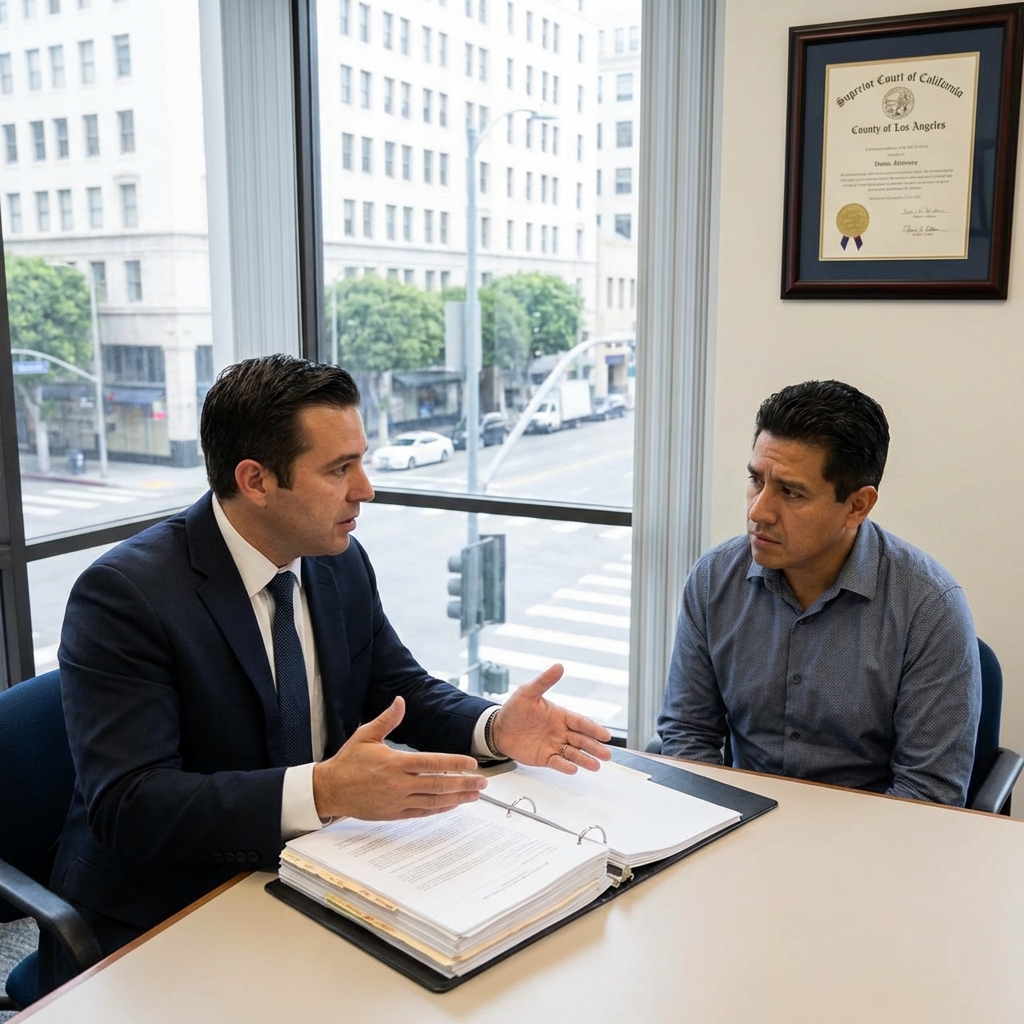
At the violation hearing itself, you’ll face testimony from probation officers, law enforcement, or alleged victims. The judge will hear one narrative. If you’re representing yourself or relying on a public defender managing sixty other cases, the prosecution’s account goes largely unchallenged. We’ve seen judges impose probation revocation sentences based on incomplete or misleading evidence simply because no one effectively disputed it.
Beyond immediate incarceration, a revocation stays on your record and can trigger collateral consequences. Professional licenses face suspension. Immigration status becomes vulnerable. Future employment opportunities narrow dramatically. Your family and community ties deteriorate while you’re incarcerated.
The financial impact is equally severe: lost wages during incarceration, legal bills mounting, and the cost of rebuilding afterward.
How We Defend Against False or Exaggerated Allegations
We begin every probation violation case by obtaining the complete violation report and interviewing you thoroughly about the allegations. What we’ve found is that probation officers often rely on secondhand information, incomplete investigations, or interpretation of ambiguous behavior.
Our defense strategy includes several key approaches:
- Challenging the factual basis of the allegation through witness testimony or documentary evidence
- Examining whether the probation officer followed proper procedures in documenting the violation
- Presenting mitigating circumstances that explain the alleged conduct without justifying it
- Demonstrating your compliance with other probation conditions to show overall good faith
- Introducing evidence of employment, family stability, or community involvement that supports reinstatement
For example, if you’re accused of a failed drug test, we request the lab results, chain of custody documentation, and your medical records. Sometimes testing errors occur, or medications produce false positives. We’ve secured probation reinstatement after discovering the lab didn’t follow proper protocols.
When probation officers claim you missed appointments, we subpoena their office records, your work schedules, and transportation documentation to establish whether the violation was intentional or circumstantial.
Our Proven Strategy for Probation Violation Hearings
We treat violation hearings like trials, because functionally they are. We prepare for cross-examination of the prosecution’s witnesses, gather admissible evidence to support your version of events, and craft a compelling narrative about who you are and why reinstatement is appropriate.
Our preparation includes:
- Meeting with you multiple times to build a detailed account of the allegation and context
- Identifying and interviewing potential witnesses on your behalf
- Researching the judge’s historical approach to similar violations and reinstatement requests
- Developing written motions that establish legal grounds for dismissal or reinstatement
- Creating a clear presentation strategy that emphasizes your rehabilitation progress
Timing is essential. We file discovery requests immediately to force the prosecution to disclose all evidence. This reveals weaknesses early and sometimes prompts them to withdraw marginal allegations.
During the hearing, we methodically challenge each element of the violation allegation. We don’t simply deny it; we present contradicting evidence. We ask pointed questions of witnesses that expose inconsistencies. We demonstrate through documentation that their version doesn’t align with objective facts.
Most importantly, we present you in context. Judges need to understand your overall compliance, your life circumstances, and why one alleged violation shouldn’t erase months or years of probation success.
Securing Probation Reinstatement Without Incarceration
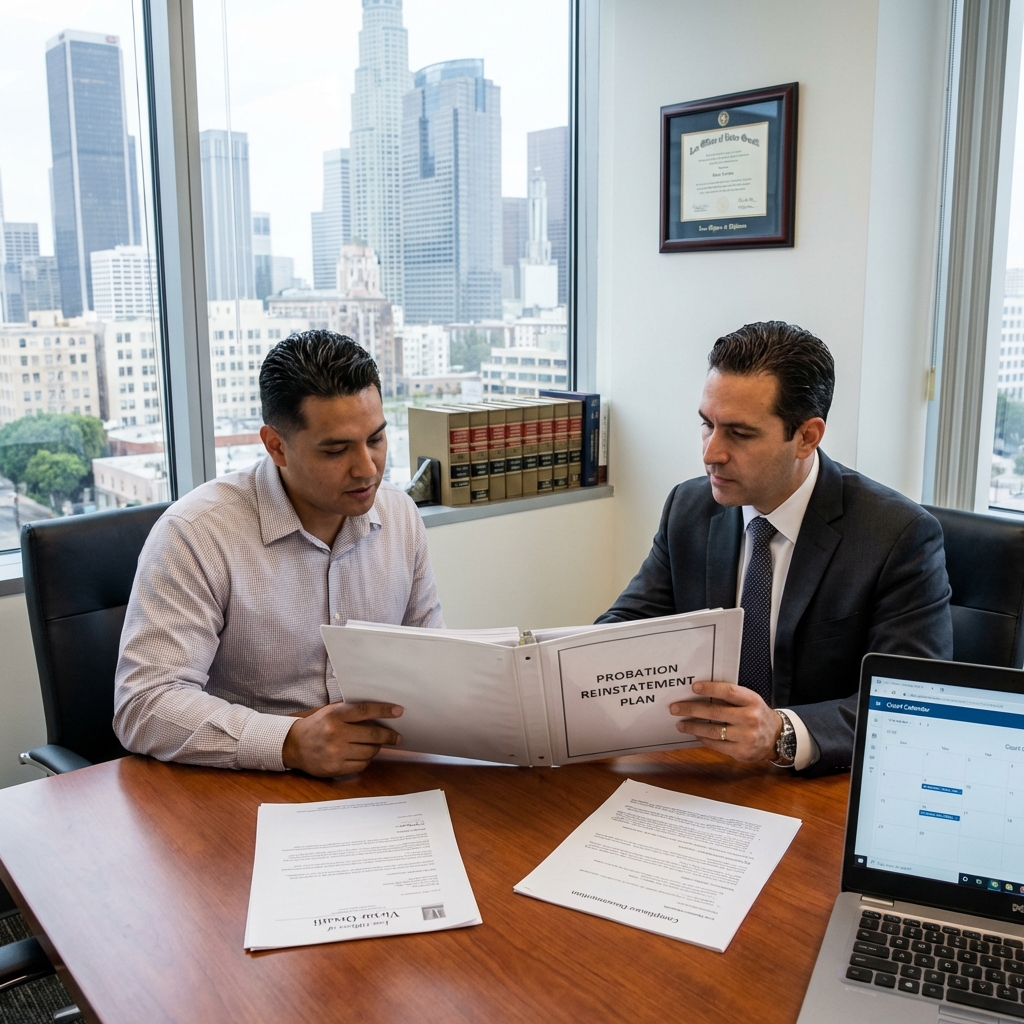
Reinstatement is our primary goal. We develop a reinstatement package that addresses the judge’s concerns and demonstrates your commitment to compliance going forward.
This package typically includes:
- Documentation of employment or enrollment in education
- Letters of support from employers, family members, or community leaders
- Proof of substance abuse treatment (if applicable)
- Payment of any restitution or fines
- A realistic plan for remaining compliant with modified conditions, if needed
We’re honest with the court about what happened while framing it favorably. Responsibility without excuses, combined with evidence of your investment in staying on track, persuades judges. We’ve successfully argued for reinstatement even in cases where the violation was admitted, because we demonstrated that incarceration serves no purpose and that you’re genuinely committed to compliance.
Sometimes reinstatement means modified probation terms: stricter supervision, additional counseling, or extended probation duration. We negotiate these modifications to avoid custody time while addressing the judge’s legitimate concerns.
Record Protection: Minimizing Long-Term Damage to Your Future
Even after successful reinstatement, the violation hearing and arrest become part of your criminal record. We work aggressively to minimize this damage.
First, we ensure that dismissals or favorable outcomes are properly documented and reported to the state court system. Second, we advise you on record expungement eligibility once probation concludes successfully. Many clients don’t realize that after completing probation without further violations, they can petition to reduce or dismiss the underlying conviction.
We also counsel you on disclosure requirements for employment and professional contexts. Understanding when and how to discuss your probation history prevents additional problems down the line.
For clients facing licensing board review, we prepare detailed explanations and documentation of rehabilitation to support your professional standing.
Our Track Record Defending Probation Cases Across Southern California
We’ve represented probation violation clients in San Diego County, Orange County, San Bernardino County, Riverside County, and Imperial County. We know the judges, understand local court procedures, and have established credibility with prosecutors across these regions.
Our clients have secured reinstatement despite serious allegations. We’ve had violation charges dismissed entirely due to procedural errors or insufficient evidence. We’ve negotiated modified probation terms that avoided incarceration altogether. Our track record reflects consistent, strategic representation focused on your specific situation and the judge hearing your case.
We’re not a high-volume public defender’s office. We handle your case personally, investing the time and investigation necessary to build a defense that actually works.
Why Rapid Legal Action Matters in Your Situation
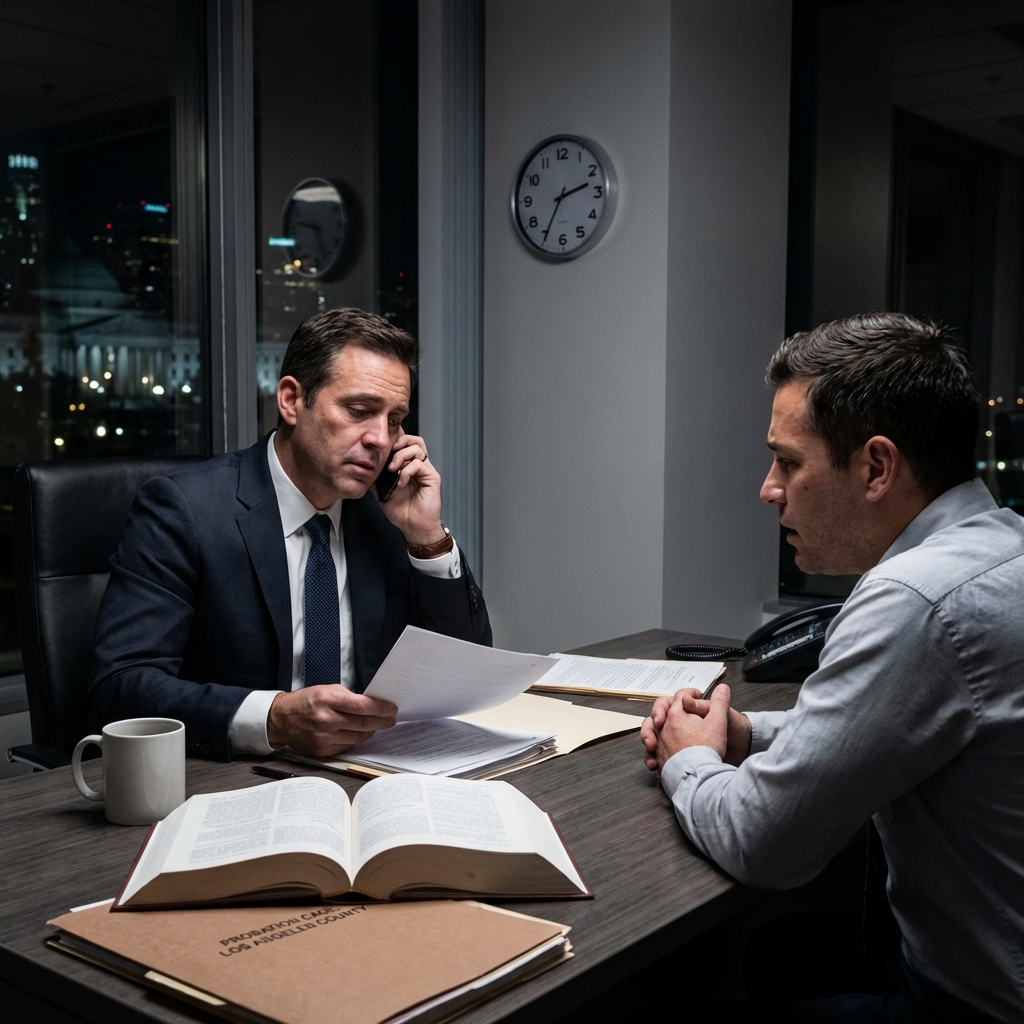
The moment you’re cited for a violation or aware that one has been filed, time becomes your scarcest resource. Delays allow the prosecution’s narrative to solidify. Witnesses’ memories fade. Documents disappear. Judges become impatient.
We move immediately to obtain discovery, interview witnesses, and file preliminary motions. Early action often prevents arrest warrants from being issued. It demonstrates to the court that you’re taking the matter seriously.
We also use early engagement to negotiate with the prosecutor. Sometimes probation violations can be resolved before the formal hearing, avoiding public court proceedings and further damage to your record.
Your 24/7 Access to Our Probation Defense Team
We’re available around the clock because violations don’t happen during business hours. If you’re arrested on a violation warrant at 2 a.m., you need someone who answers the phone and begins working your case immediately.
Call us for a free consultation anytime. We’ll assess your situation, explain your options, and outline exactly what we’ll do to protect your freedom and record. We offer flat-fee representation and flexible payment plans because cost shouldn’t prevent you from securing experienced defense.
Your probation case is urgent. The consequences of inadequate representation are incarceration and a damaged future. We’ve built our practice on one principle: giving our clients the dedicated, strategic defense that public defenders cannot.
Contact us today at https://www.victororsatti.com or call 24/7. Let us fight for your reinstatement and your future.
For further reading: SoCal criminal defense attorney.
Frequently Asked Questions (FAQ)
What should I do immediately if I’m accused of violating my probation?
Contact us right away for a free 24/7 consultation so we can review the specific allegations against you and assess your situation before your probation officer takes action. We’ll help you understand whether the accusation is valid and develop a defense strategy that protects your freedom and record. The sooner we intervene, the better positioned we are to negotiate with your probation officer or prepare for a hearing.
What’s the difference between a technical violation and a substantive violation, and does it affect our defense approach?
Technical violations involve administrative breaches like missing a check-in or failing a drug test, while substantive violations mean you’ve committed a new crime or engaged in serious misconduct. We handle both types differently in our defense strategy because technical violations often have more room for negotiation and may not require incarceration, whereas substantive violations demand aggressive representation to challenge the evidence or demonstrate mitigating circumstances.
Can we get my probation reinstated without jail time?
Yes, we’ve successfully secured probation reinstatement for many clients by presenting compelling arguments at the hearing, demonstrating your commitment to compliance, and negotiating with the prosecution. Our approach focuses on showing the court that you deserve a second chance rather than incarceration, and we work to minimize the conditions imposed on your reinstated probation.
Leave a Reply