
Top Strategies for San Diego Attempted Murder Defense Cases
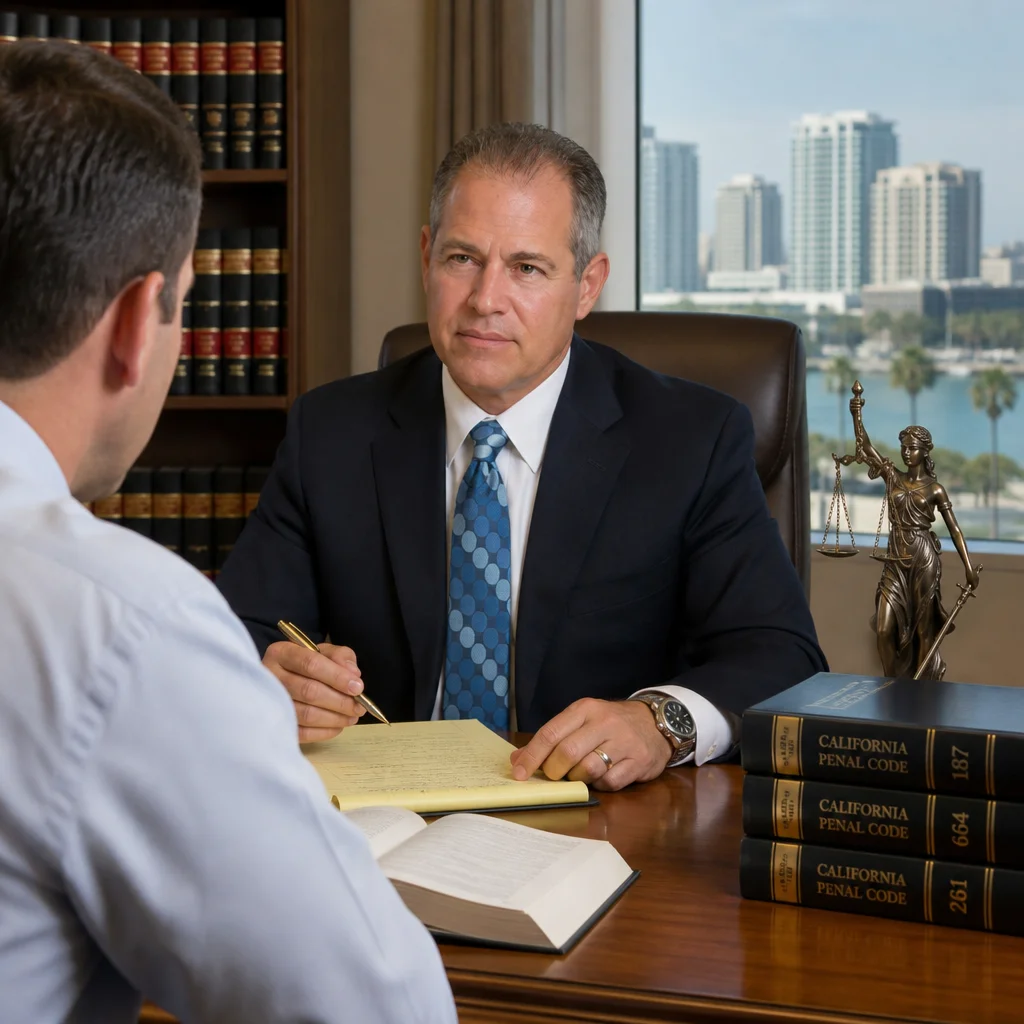
04
Oct
Top Strategies for San Diego Attempted Murder Defense Cases
Table of Contents
- Why Attempted Murder Charges Demand Strategic Legal Expertise
- Understanding Attempted Murder Elements and Prosecution Strategy
- Critical Defense Strategies We Use to Challenge Charges
- Evidence Examination and Witness Testimony Analysis
- Negotiation and Reduction Opportunities in Attempted Murder Cases
- Our Track Record Building Strong Defense Cases
- How We Protect Your Rights During Investigation
- Sentencing Mitigation and Alternative Resolution Options
- Why Local San Diego County Experience Matters
- Selecting the Right Criminal Defense Partner for Your Case
- Frequently Asked Questions (FAQ)
Why Attempted Murder Charges Demand Strategic Legal Expertise
Attempted murder charges represent some of the most serious felonies you can face in California. The stakes demand more than standard legal representation. We’ve spent decades defending clients across San Diego County, Riverside County, San Bernardino County, and Orange County against these charges, and we understand exactly what prosecutors must prove and where their cases are vulnerable.
Your defense requires someone who knows the local courts, judges, and prosecutorial tendencies in your jurisdiction. That’s where our experience becomes your advantage.
Attempted murder convictions carry sentences of life imprisonment in California under Penal Code 664/187. A conviction doesn’t just mean prison time; it means a permanent felony record that destroys employment prospects, housing options, and your standing in the community.
The complexity here is fundamental. Prosecutors must establish specific intent to kill alongside the direct step toward that goal. They must prove your mental state at the exact moment of the alleged conduct. These elements create multiple avenues for mounting a strong defense, but only if your attorney knows how to identify and exploit them.
We’ve seen cases collapse because the prosecution failed to adequately prove premeditation or intent. We’ve watched juries reject the state’s narrative when evidence is properly challenged. The difference between a conviction and an acquittal often comes down to whether your defense strategy addresses the specific weaknesses in the prosecution’s theory from day one.
What to do next: Contact us for a free 24/7 consultation to discuss the specific elements prosecutors are relying on in your case.
Understanding Attempted Murder Elements and Prosecution Strategy
California law requires prosecutors to prove two distinct elements for attempted murder: (1) you acted with direct intent to kill, and (2) you committed a direct step toward that killing, not merely preparation.
This is different from assault or battery. The prosecution must show you didn’t just act recklessly or with general criminal intent. They must demonstrate you had the specific, conscious objective to end someone’s life. Evidence they typically rely on includes witness statements about threats you made, the type of weapon used, the number of strikes or shots, and statements you made before or after the incident.
San Diego County prosecutors often pair attempted murder charges with alternative counts like assault with a deadly weapon or aggravated assault. Understanding their full theory of the case allows us to identify inconsistencies and build pressure on the weakest elements of their evidence.
Local court data shows that attempted murder cases in San Diego frequently hinge on witness credibility and the interpretation of ambiguous injuries or weapon use. When the alleged victim survives, the prosecution’s case often relies heavily on reconstructing your mental state through circumstantial evidence rather than direct proof.
What to do next: Carefully review all police reports, witness statements, and medical records with an attorney who can identify evidentiary gaps.
Critical Defense Strategies We Use to Challenge Charges
Our defense approach starts with a comprehensive case theory that addresses the prosecution’s burden head-on.
Lack of Intent to Kill: This is the most powerful defense in attempted murder cases. We examine whether the evidence truly supports specific intent to kill or merely supports a lower offense like assault. If you used your hands instead of a weapon, or if injuries were relatively minor, we argue the totality of circumstances doesn’t support intent-to-kill theory.
Imperfect Self-Defense Claims: If you acted with an honest but unreasonable belief that you faced imminent danger, California law provides a partial defense that can reduce attempted murder to assault or voluntary manslaughter. This requires careful factual development and credible expert testimony about the circumstances you faced.
Voluntary Intoxication: Evidence that you were intoxicated to the point of being unable to form specific intent can negate the mental state requirement. This is a targeted defense that only applies to specific intent crimes like attempted murder.
Failure to Commit a Direct Step: We challenge whether your actions constituted a direct step toward killing or merely preparation. A phone call threatening violence, for example, is not a direct step. This requires distinguishing between conduct that shows clear objective probability of killing versus conduct that’s still in the preparatory phase.
Misidentification: In cases where witnesses couldn’t clearly see the perpetrator or circumstances created confusion, we present evidence supporting mistaken identity.
Each case receives individualized analysis. We don’t apply cookie-cutter approaches because attempted murder cases are fact-specific and judgment-dependent at every stage.
Evidence Examination and Witness Testimony Analysis
The prosecution’s case lives or dies on evidence quality. We conduct rigorous examination of every piece.
Physical Evidence: We retain forensic experts to challenge weapon analysis, injury patterns, and crime scene reconstruction. If the state’s expert conclusions rely on assumptions rather than hard science, we expose that. Weapon distance, trajectory analysis, and injury mechanism all matter. A single wound to the torso may tell a very different story about intent than multiple wounds to vital organs.
Witness Credibility: We investigate every witness thoroughly. Criminal cases often depend on eyewitness testimony given under stressful conditions, sometimes months after the alleged event. We examine whether witnesses had clear sightlines, unobstructed views, and whether lighting, distance, or intoxication affected their perception. We also investigate whether witnesses had motivations to lie, prior inconsistent statements, or criminal histories that affect credibility.
Digital and Surveillance Evidence: Cell phone records, text messages, social media posts, and surveillance footage create an objective record of what happened. Prosecutors often cherry-pick these materials. We examine the full context of digital communications and scrutinize the chain of custody for surveillance evidence.
Medical Records and Expert Opinion: We retain independent medical experts to evaluate the alleged victim’s injuries and provide alternate explanations for injury patterns. Sometimes injuries tell a story different from the prosecution’s narrative.
We’ve obtained acquittals in attempted murder cases where thorough evidence examination revealed prosecutorial theory didn’t align with physical reality.
Negotiation and Reduction Opportunities in Attempted Murder Cases
Not every case proceeds to trial. When trial carries genuine risks, we evaluate whether negotiated resolution serves your interests.
We approach plea negotiations from a position of strength, armed with evidence of weaknesses in the prosecution’s case. This leverage opens doors to meaningful reductions. We’ve successfully negotiated attempted murder charges down to aggravated assault, assault with a deadly weapon, or even simple assault in cases where the evidence supported our position.
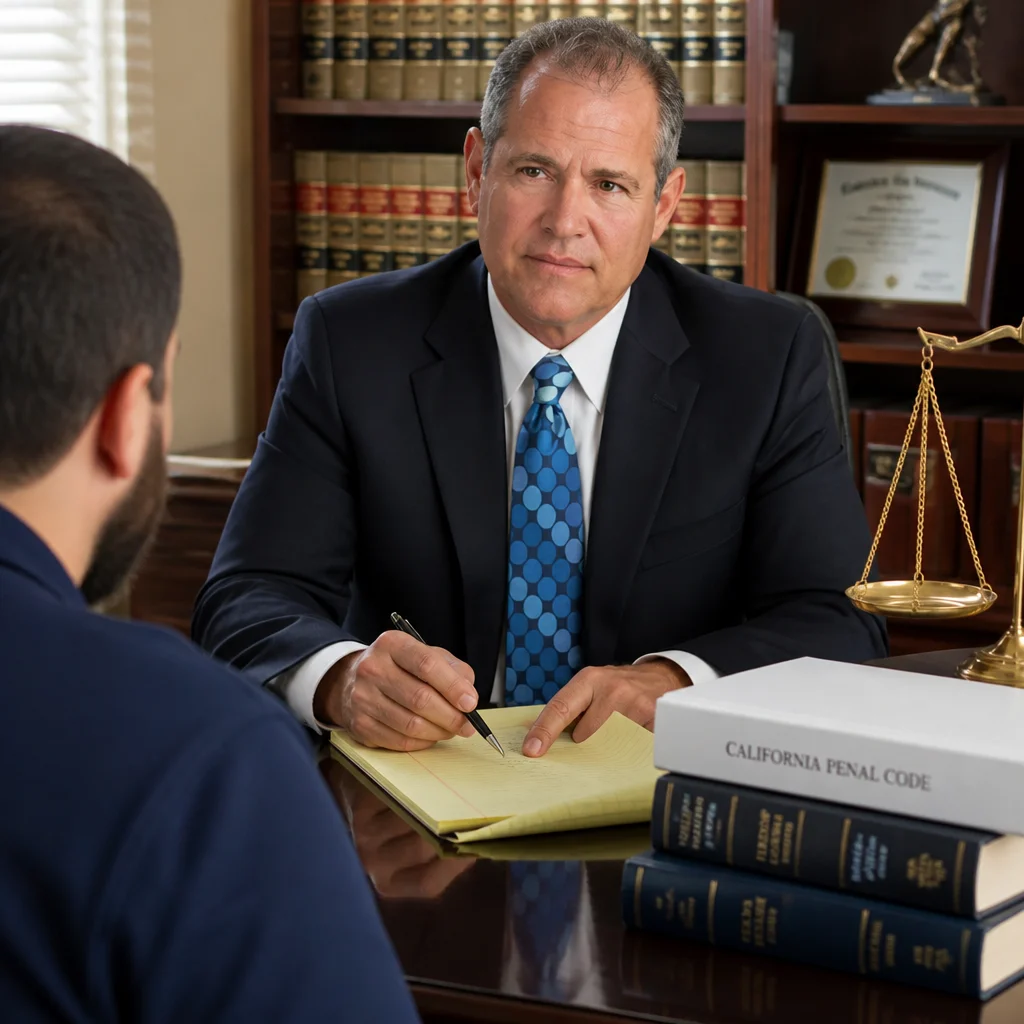
The difference between conviction on attempted murder (15-to-life sentence) and conviction on assault with a deadly weapon (varies from probation to 4 years) is transformational. Some clients benefit from accepting a probation-based resolution that keeps them out of prison and allows record relief in the future.
Critical: We never pressure clients toward any particular resolution. We present the mathematical risk of trial, the strength of available defenses, and the terms being offered, then let clients make informed decisions. Your interests drive our negotiations, not case volume or arbitrary timelines.
Our Track Record Building Strong Defense Cases
Over three decades serving Southern California, we’ve defended hundreds of felony cases, including serious violent crimes. Our case results speak to our strategic approach and courtroom effectiveness.
We’ve obtained acquittals on attempted murder charges where prosecution evidence seemed compelling on its surface. We’ve negotiated reductions that saved clients decades in prison time. We’ve rebuilt lives by securing expungements after successful conclusions to cases.
Our track record reflects deep knowledge of San Diego County courts and judges. We understand judicial temperament, evidentiary preferences, and how individual judges evaluate credibility in violent crime cases. That institutional knowledge shapes every strategic decision we make.
But results aren’t just trial verdicts. They include successful warrant recalls for clients who feared arrest, negotiated probation violations where jail time was avoided, and record clearances that restored employment and housing opportunities.
How We Protect Your Rights During Investigation
Police investigations often involve constitutional violations. We protect your rights from the moment you retain us.
If police want to question you, we counsel you immediately to decline without counsel present. Statements made without an attorney present are heavily used by prosecutors. We handle all police communication and ensure you’re not inadvertently admitting to facts that damage your defense.
We also examine whether police obtained evidence legally. Did they have a valid search warrant? Did they properly obtain consent? Did they violate your Miranda rights? We file motions to suppress illegally obtained evidence, which can collapse entire prosecutorial theories if key evidence gets excluded.
We also manage bail and release conditions. If you’re detained, we move aggressively for release or reduced bail based on ties to the community, employment, and family circumstances. We negotiate for reasonable conditions that don’t interfere with your ability to work or participate in your defense.
Sentencing Mitigation and Alternative Resolution Options
If your case reaches sentencing, we prepare comprehensive mitigation presentations that influence outcomes.
We develop evidence of your background, character, mental health history, and circumstances that provide context for judicial consideration. We present family testimony, employment history, military service, educational achievements, and community contributions. We explore substance abuse treatment needs, mental health conditions, or trauma that affected your judgment.
California judges have discretion in sentencing determinations. That discretion is meaningless without compelling mitigation evidence. We ensure judges have complete information about who you are, not just what you’re accused of doing.
We also explore alternative sentencing options like probation, mental health treatment courts, or residential rehabilitation programs that may be available depending on your specific circumstances and prior history.

Why Local San Diego County Experience Matters
San Diego County courts operate differently than Riverside, San Bernardino, or Orange County courts. Judges have different temperaments. Prosecutors follow different charging practices. Juries have different composition and attitudes toward criminal defendants.
Our deep roots in San Diego County mean we understand these nuances. We know which judges are receptive to self-defense claims. We know which prosecutors are willing to negotiate and which prefer to litigate every case. We know the local criminal defense bar and how to work effectively in San Diego’s specific legal ecosystem.
This local knowledge compounds our effectiveness. Cases are won or lost through strategic choices informed by years of courtroom observation and relationship-building with judges, prosecutors, and court staff.
Selecting the Right Criminal Defense Partner for Your Case
Attempted murder charges require defense counsel with serious felony experience, courtroom skill, and the judgment to make sound strategic decisions under pressure. You need someone who won’t be intimidated by prosecution overreach and who understands that your freedom and future depend on quality representation.
We offer free 24/7 consultations because serious charges demand immediate attention. We work with affordable flat-fee pricing and flexible payment plans so financial constraints don’t force you toward inadequate representation. But we never compromise on quality or dedication.
When you retain the Law Offices of Victor Orsatti, you’re choosing an attorney with over 30 years of criminal defense experience across Southern California. You’re choosing someone who has successfully defended attempted murder cases and knows exactly how to challenge prosecution theory. You’re choosing an advocate who will fight for your rights, explain your options clearly, and guide you toward the best possible outcome.
Contact us today for a confidential consultation. Your case deserves defense counsel with proven experience, strategic depth, and the commitment to protect your future.
For further reading: San Diego attempted murder defense.
Frequently Asked Questions (FAQ)
What should I do immediately if I’ve been charged with attempted murder in San Diego?
Contact us right away for a free 24/7 consultation so we can begin protecting your rights before the investigation advances further. We’ll review the specific allegations, explain the charges you’re facing, and outline our defense strategy tailored to your situation. Time is critical in serious felony cases, and we work quickly to gather evidence, identify weaknesses in the prosecution’s case, and position you for the best possible outcome.
How do we challenge attempted murder charges when the evidence seems strong against me?
We attack attempted murder cases from multiple angles by examining whether the prosecution can actually prove all required elements, including your specific intent to kill and whether you took a direct step toward that goal. We scrutinize witness credibility, challenge forensic evidence, investigate police procedures for violations of your rights, and identify inconsistencies in the prosecution’s narrative. Many cases that appear overwhelming initially contain significant vulnerabilities once we conduct a thorough investigation and analysis.
What outcomes can we realistically pursue in an attempted murder case?
Our goal is always to avoid incarceration when possible, which means we pursue charge reductions to lesser felonies, negotiate favorable plea agreements with reduced sentences, or prepare an aggressive trial defense if that serves your best interests. We also work toward sentencing mitigation strategies and explore alternative resolutions that protect your future and livelihood. Every case is unique, and we’ll give you honest feedback about your specific circumstances during our initial consultation.